Abstract: In the context of Vietnam’s strong rise on the international stage with the aspiration to become a developed nation by the middle of the 21st century, the effective implementation of ethnic policies is becoming increasingly urgent, playing a key role in ensuring sustainable, equitable and inclusive development. This article focuses on analyzing the achievements, challenges and directions for improving ethnic policies in the new era, a period where the spirit of national self-reliance combined with deep international integration demands both respect for cultural identity and the promotion of comprehensive development in ethnic minority and mountainous areas.
Keywords: Ethnic policy; Ethnic; Ethnic minority and mountainous areas; Vietnam.
Received: 24/9/2025; Reviewed: 28/9/2025; Revised: 3/10/2025; Accepted: 6/10/2025.
1. Introduction
Vietnam is a unified, multi-ethnic country, with 54 ethnic groups living together, of which ethnic minorities account for approximately 14.7% of the population (Vu Huong Giang, 2023). Historically, the Party and State’s ethnic policies have consistently affirmed the principles of equality, solidarity, mutual assistance, respect and helping each other to develop together. Throughout the history of national building and defense of the Vietnamese people, national unity, especially the close blood ties between ethnic minorities and the Kinh people has always been considered the foundation of national strength. For a long time, the ethnic policy has not only been a part of socio-economic development policy, but also a vivid expression of the consistent principle of equality, solidarity, respect and mutual support among ethnic groups, an unwavering principle in the development guidelines of the Party and the State.
Entering the 21st century, especially in the context of Vietnam’s accelerated comprehensive reforms, deep international integration and its goal of becoming a developed nation by the middle of the century, our country is entering an “era of growth” - a period of change in stature, intellect, resilience and position. In that era, the implementation of ethnic policies could no longer continue with the old way of thinking, which was focused on one-way support, addressing consequences, or simply concentrating on poverty reduction, instead, it had to shift to a comprehensive, sustainable development approach, centered on people and measured by equitable progress. In practice, despite achieving many significant achievements, ethnic minority and mountainous areas still face the most development challenges in the country as: high poverty rates, limited access to education and healthcare services, the development gap between regions have not narrowed significantly, while the risks of cultural identity loss, climate change, spontaneous migration and the impacts of globalization are increasing. These issues necessitate a restructuring of policy thinking, shifting from “assistance” to “co-development”, and from “external support” to “internal empowerment”.
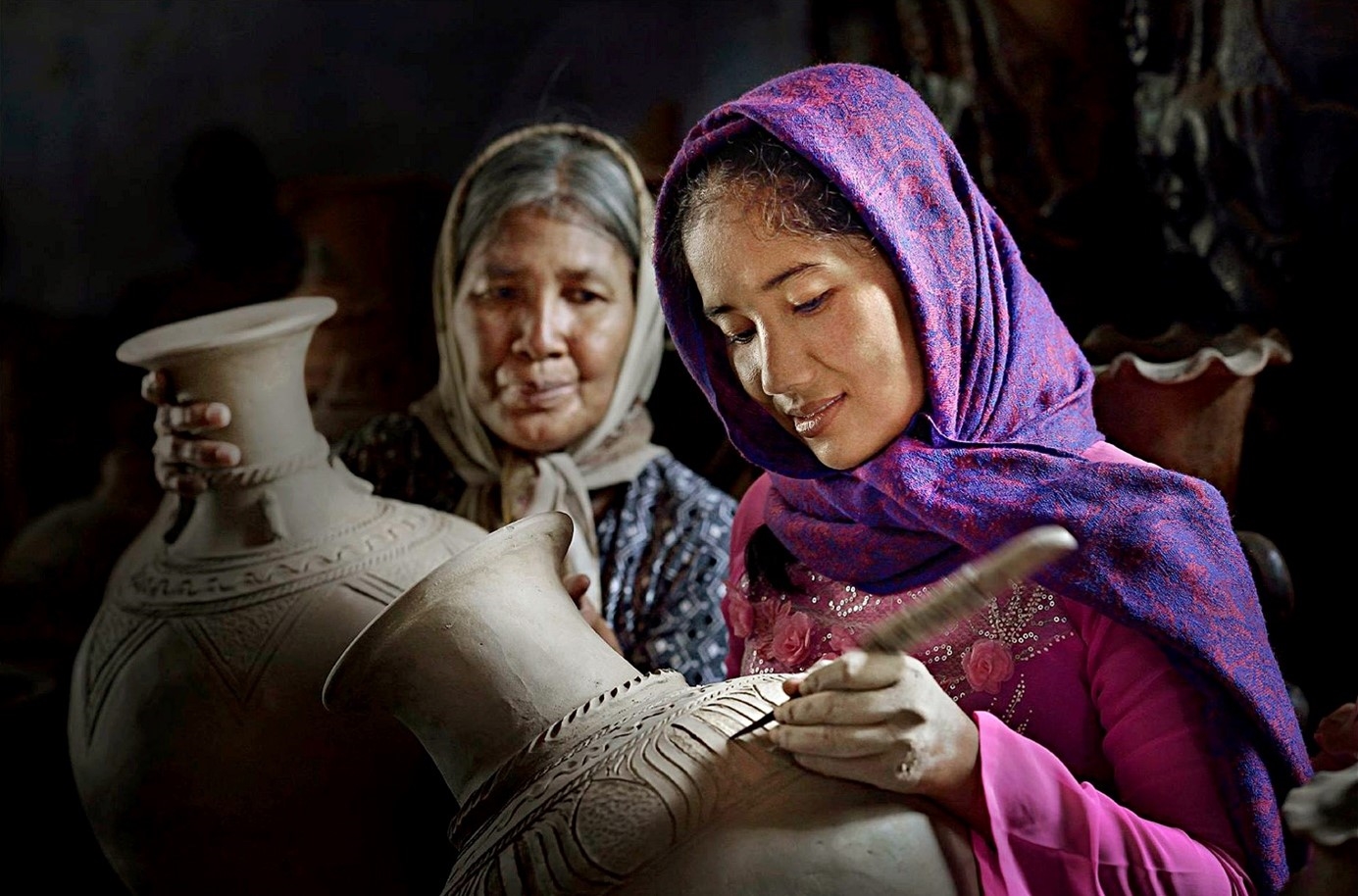 The Cham people in Khanh Hoa province produce traditional pottery products
In this context, implementing the socio-economic development plan not only has socio-economic significance but also serves as a strategic driving force for national development. National policy cannot stand apart from the aspirations of the Vietnamese nation; it must become a cornerstone of those aspirations, where development does not equate to assimilation, modernization does not come at the expense of identity and integration does not diminish cultural diversity.
Therefore, re-examining the implementation of the socio-economic development plan in the new era is an urgent requirement and has profound practical and theoretical significance. How can ethnic minority and mountainous areas not only catch up but also contribute to the overall development process? How can national identity not be diluted but instead become an important endogenous resource in the development process? And more importantly, how can socio-economic development truly become an indispensable component of Vietnam’s national development strategy in the 21st century?
This article aims to analyze the new context, assess the results and limitations in the current implementation of the ethnic policy, therefore proposing strategic directions to promote the ethnic policy as an endogenous driving force in realizing the aspiration for a prosperous, democratic and sustainable national development.
2. Research results
2.1. A new context and an era of national resurgence
Vietnam’s current era can be called the “era of national resurgence”, a special historical period in which the country is gradually overcoming the limitations of a developing economy to move towards the stature of a developed, independent, self-reliant, democratic and civilized nation. This is not merely a process of economic growth, but a comprehensive transformation in strategic vision, political institutions, scientific and technological capabilities, cultural and human strength, and international standing.
In the context of deepening globalization, complex geopolitical competition, and the fourth industrial revolution creating unprecedented changes in all fields, Vietnam faces intertwined opportunities and challenges. The 13th National Congress of the Party set the aspiration to make Vietnam a developed, high-income country by 2045. This is not just a technical goal, but a historically significant development declaration demonstrating a determination to surpass oneself, overcome inherent barriers and build a prosperous and sustainable future.
However, for that aspiration to become a reality, a synchronized movement is needed from all sectors of society, all regions of the country, especially from ethnic minority and moutainous areas, which occupy nearly three-quarters of the territory and have a strategically important position in terms of national defense and security, ecology and culture. A nation cannot fully “rise up” if there are still ethnic groups “left behind”. Therefore, the implementation of ethnic policies should no longer be seen as a specific, welfare-oriented policy, but rather as a strategic task, an organic component in the national development process.
The concept of “striving forward” in the current context not only reflects GDP growth or infrastructure modernization, but also encompasses the development of endogenous capacity within individuals, communities and institutions. It represents the rise of Vietnamese intellect, of Vietnamese cultural resilience, of the aspiration for independence, self-reliance and integration without assimilation. In this context, each ethnic minority community cannot be merely a component of a “developmentally disadvantaged area”, but must be an active and creative partner in reshaping the country’s sustainable and inclusive development model.
At the same time, “stretching forward” also requires restructuring development principles, from management thinking to policy models. Sustainable development is impossible if socio-economic development policies remain limited to short-term material support, instead of promoting long-term self-reliance and development capacity. Deep integration is impossible if ethnic minority cultures are not respected, embraced and promoted as part of the nation’s soft power.
Therefore, implementing ethnic policies in the era of national progress must be linked to fundamental changes in awareness and methods of action: shifting from a “helpful” approach to a “cooperative development” approach; from administrative governance to governance based on rights, capabilities and identity; from a homogeneous mindset to a multicultural mindset as a competitive advantage in the globalized era.
In short, the “era of national resurgence” cannot be understood in terms of separating between the center and the remote, between the majority and the minority, or between the modernity and tradition. The success of this era can only be guaranteed when the ethnic policies truly become a central part of the national development strategy, helping each community, whether in border areas or urban centers, mountainous regions or plains, in order to embark on a journey of development, with the belief that: no ethnic group has been forgotten in the overall rise of the Vietnamese nation.
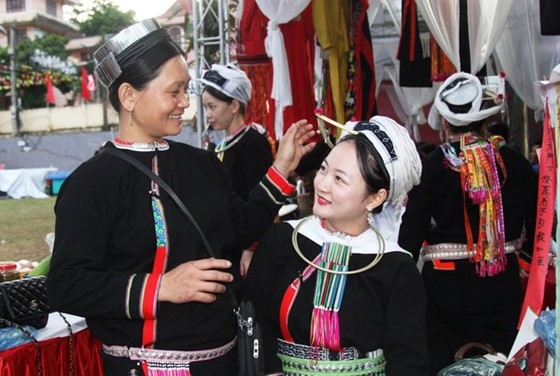 Preserving and promoting the cultural identity of ethnic minorities in the era of integration is one of the policies that has been and is being effectively implemented
2.2. Current challenges
Although Vietnam has achieved many important accomplishments in building and implementing ethnic policies, especially since the implementation of the national target program for socio-economic development in ethnic minority and mountainous areas for the period of 2021-2030, practice still shows a series of existing challenges hindering the realization of the aspiration “leaving no one behind” in the country’s new development era. These challenges are not merely technical or institutional in nature, but also reflect deep gaps in policy thinking, resource structures and development dynamics. Based on the above issues, we need to continue researching several problems such as: Firstly, the development gap between regions continues to persist and tends to widen. Secondly, the quality of human resources and community development capacity remains low. Thirdly, there is a risk of cultural identity erosion in the process of integration. Fourthly, there is a lack of effective inter-sectoral coordination and monitoring mechanisms. Fifthly, the complex impacts of climate change and population migration…
2.3. Achievements of ethnic policy in the past period
The ethnic policy has always been one of the strategic pillars in the entire system of socio-economic development policies of the Party and the State. Based on a consistent ideology of national unity, a consistent policy of equality, respect and creating conditions for all ethnic groups to develop together, over more than three decades of reform, and especially in the recent period, Vietnam has achieved many important accomplishments in implementing the ethnic policy, both in terms of institutional design, policy implementation, improving living conditions and developing ethnic minority communities. These achievements are not only significant in the short term, but also strategically important for realizing the nation’s development aspirations in the 21st century.
a) The policy system is becoming increasingly comprehensive, synchronized and in-depth.
One of the most notable achievements is the formation of an integrated, interdisciplinary and long-term ethnic policy framework. A highlight is the promulgation of the National Target Program for Socio-Economic Development of Ethnic Minority and Mountainous Regions for the period of 2021-2030 (Decision No. 1719/QD-TTg dated October 14th, 2021, of the Prime Minister), with the largest total investment capital ever.
The program has fundamentally changed the policy approach: from fragmented, one-way support to a multi-targeted, multi-sectoral approach, integrating resources and focusing on sustainable poverty reduction, capacity building and creating sustainable livelihoods for the people. At the same time, relevant legal and policy documents such as the amended Education Law, the Law on Supporting Small and Medium-Sized Enterprises, the National Strategy on Gender Equality, land policies, credit, health insurance and boarding education policies... are also being adjusted to create a more consistent and friendly legal framework for ethnic minority groups.
Furthermore, regulations prioritizing the training and recruitment of ethnic minority cadres, developing intellectuals, artisans and influential figures in the community have contributed to establishing a more humane and appropriate institutional foundation that aligns with the diverse realities of the country.
b) Significant progress has been made in improving the living conditions of ethnic minority communities
Over the years, the quality of life and human development indicators of ethnic minority communities have improved significantly, such as: (1) The poverty rate among ethnic minority and mountainous areas has decreased significantly year by year. (2) Essential infrastructure such as roads, national power grid, schools, health stations, clean water system, telephone network... have been heavily invested in, creating a great step forward in connecting remote areas with the central area. (3) The health insurance coverage rate in ethnic minority and mountainous areas is over 95%; the rate of children attending school, especially at the primary and secondary levels is maintained at a high level.
In particular, many highland localities have seen the emergence of effective economic development models based on local strengths such as: community tourism, organic farming, handicraft villages, medicinal plants, smart agriculture,... These models not only improve income but also help to strengthen cultural bonds, enhance community organizational capacity and forming a sense of self-reliance among the people.
c) National culture is preserved and promoted in a positive way
Policies for preserving and promoting the cultural identity of ethnic minorities have made significant progress, shifting from superficial to profound. Many traditional festivals are being revived in conjunction with tourism; artisans are being honored, supported in their creations and encouraged to pass on their skills. Cultural identity is not only “preserved” but is also gradually “exploited” as a soft resource in socio-economic development, strengthening national cultural identity in the context of integration.
d) The status and role of ethnic minorities are increasingly being enhanced
Along with improved material conditions, indicators of equality, access to services and participation in socio-political life for ethnic minority communities have made significant progress. The number of ethnic minority officials, civil servants and public employees in the political system has been steadily increasing every year; in many localities, ethnic minority people hold key leadership roles. Ethnic minority communities are increasingly being listened to and consulted in the process of policy development and implementation.
In particular, the team of respected individuals, village elders, community leaders have become an effective bridge between the State and the people, contributing to strengthening trust in the institution, maintaining national defense and security and spreading the spirit of solidarity throughout society.
Therefore, the achievements made in implementing the ethnic policy in recent times have not only created fundamental changes in the lives of the people, but also strengthened the overall power of national unity, helping Vietnam to move forward steadily in the era of development.
2.4. Current shortcomings and gaps in ethnic policies
Despite achieving many notable accomplishments, the current ethnic policy system still has numerous shortcomings and gaps, hindering the ability of ethnic minority communities to fully utilize their internal strengths in the process of national development. These shortcomings are not only technical implementation issues, but also stem from limitations in thinking, approach and policy design, such as: Firstly, policy thinking is still biased and inflexible. Secondly, the policies lack integration and systemic consistency. Thirdly, there are gaps in the design of long-term development policies. Fourthly, there is a lack of mechanisms for empowering and genuinely engaging the community…
2.5. Orientation for implementing ethnic policies in the new era
Entering a new era of development, where the aspiration for prosperity, equity, and sustainability becomes the core driving force of the entire nation, the socio-economic development policy needs to be restructured in terms of thinking, goals and implementation methods. Based on the above issues, in order to effectively implement ethnic policies in the new era, special attention should be paid to the following points: Firstly, shifting from a “help” mindset to a “self-development” mindset. Secondly, strengthening integration, interdisciplinary collaboration and data-driven governance. Thirdly, prioritizing human resource development and enhance the institutional capacity of the community. Fourthly, developing the local economy and sustainably exploiting cultural resources. Fifthly, promoting genuine community participation in the policy implementation process…
3. Discussion
Implementing the ethnic policy in the current context should be viewed not only as a socio-political responsibility, but also as a strategic component in the process of transforming the national development model towards sustainability, inclusiveness and the unleashing of endogenous capacity. Based on an analysis of the current situation, achievements and policy gaps, several key points can be drawn for discussion, offering suggestions for future reform directions.
Firstly, the ethnic policy needs to be elevated to the level of a comprehensive national development policy.
Secondly, the national issue is a development issue and cannot be solved solely through welfare.
Thirdly, cultural identity is not just a heritage, but a resource for development.
Fourthly, citizen participation is a prerequisite for policy success.
Therefore, discussions on implementing the ethnic policy in the new era should not be limited to administrative parameters, but should be expanded to include strategic theoretical discussions: about development equity, cultural diversity, participation rights and institutional structures. This forms the basis for designing policies that are not only practically effective but also contribute to building an inclusive, humane and sustainable national development model, commensurate with the country’s vision for advancement in the 21st century.
4. Conclusion
The ethnic policy is not only a part of the national development strategy, but also a fundamental test of the stature of a modern, equitable and humane multi-ethnic nation. In this era of national development, as Vietnam is making strong strides in transforming its development model towards sustainability, inclusiveness and innovation, enhancing the effectiveness and efficiency of ethnic policies has become an essential requirement, both theoretically and practically.
The achievements of the past have laid an important foundation for improving the lives of ethnic minority people and strengthening national unity. However, there are still many policy gaps, institutional shortcomings and limitations in development thinking that need to be overcome.
In order to realize the aspiration for comprehensive, equitable and sustainable development, the ethnic policy needs to be designed in a way that: creating opportunities, promoting endogenous capacity, respecting diversity and empowering communities to develop.
Affirming the central role of ethnic minority communities in national development is a strategic choice. This is not only a recognition of historical and cultural value, but also a political and ethical commitment to sustainable development. In the nation’s journey of progress, no community is left behind, and all ethnic groups are equal subjects in building a prosperous future for Vietnam.
References
1. Central Executive Committee of the Communist Party of Vietnam. (2021). Documents of the 13th National Congress, Volumes I and II. Hanoi: National Political Publishing House.
2. Government. (2021). Decision No. 1719/QD-TTg dated October 14th, 2021 on approving the National Target Program for socio-economic development of ethnic minority and mountainous areas for the period of 2021-2030.
3. Nguyen Duy Dung. (2021). New rural economic development in Vietnam associated with environmental protection. Hanoi: Construction Publishing House.
4. Nguyen Duy Dung, Ha Trong Nghia. (2022). Accompanying the development of ethnic minority and mountainous areas in the current context. Front Magazine, No. 223 (March).
5. Vu Huong Giang. (2023). The current ethnic policy of the Vietnamese Party and State. https://chinhtrivaphattrien.vn/chinh-sach-dan-toc-cua-dang-nha-nuoc-viet-nam-hien-nay-a8064.html
6. Nguyen Thi Thu Thanh. (2021). Vietnam’s ethnic policy over 35 years of reform. https://www.tapchicongsan.org.vn/web/guest/van_hoa_xa_hoi/-/2018/821701/chinh-sach-dan-toc-cua-viet-nam-qua-35-nam-doi-moi.aspx
7. UNESCO. (2022). Harnessing Cultural Diversity for Sustainable Development, Policy Brief, Paris.
8. UNDP Vietnam. (2022). Leaving No One Behind in Ethnic Minority Areas: Data, Policy and Practice.
