English review |
Dr. Ly Thi Thu*; Hoang Thi Phuong Lien** -
15:12, 10/08/2026 Abstract: In the context of developing a socialist-oriented market economy, deep international integration, and rapid social change, the task of consolidating national unity is posing new, profound and broader demands. One of the key factors determining the nature of national unity is the degree of equality in opportunities for development and quality of life among different regions and ethnic groups.

Abstract: The right to access information is one of the basic rights of citizens, recognized by the Constitution and laws of Vietnam and to be an important condition for people to exercise other rights and participate in the country’s political and social life. For ethnic minorities, this right is especially significant given the unequal socio-economic conditions, information infrastructure and access to information. This article analyzes the policy and legal framework for ensuring the right of ethnic minorities to access information; it assesses the practical results of implementation over the past period to clearly see Vietnam's efforts, especially those of the Ministry of Ethnic and Religious Affairs, in ensuring the right of ethnic minorities to access information in a substantive and effective manner.
English review |
Dr. Phu Van Han; MA. Nguyen Duy Dung; Lieutenant Colonel, MA. Hoang Duc Thanh -
14:50, 22/07/2026 Abstract: Throughout the long history of nation-building and national defense of the Vietnamese people, the close ties and companionship between ethnic groups and religions with the destiny of the nation have always been a distinctive feature, vividly demonstrating the strength of the great national unity. In the current context, when the country is entering a new stage of development, with high requirements for international integration, sustainable development and maintaining socio-political stability, the accompanying role of ethnic groups and religions has become more important than ever.

Abstract: This article primarily uses a qualitative approach to analyze potential factors, collecting data from two main sources: secondary sources (planning documents, socio-economic reports, historical texts related to Ca Thanh commune, Cao Bang province) and primary sources collected through field surveys and in-depth interviews with stakeholders including cultural management officials, local people, tourists and tourism experts. The collected data will be processed using synthesis, comparison and especially WOT (Strengths, weaknesses, opportunities, threats) analysis to comprehensively analyze and assess the potential for community tourism development in Ca Thanh commune, as well as its limitations and challenges, based on this, several solutions for developing community tourism are proposed to effectively exploit cultural identity, promote the role of the community, improve infrastructure, diversify products and promote policies supporting sustainable tourism development.

Abstract: Lao Cai is a land rich in historical traditions and diverse cultural identities, with 34 ethnic groups living together. From the perspective that culture is both a goal and a driving force for development, the locality has implemented many innovative models to preserve heritage while promoting sustainable tourism. This article analyzes the core points in the cultural preservation strategy of ethnic minorities in Lao Cai province, from restoring festivals, traditional crafts and folk knowledge to promoting the role of communities and artisans. From this, we can draw profound lessons and offer some suggestions to further transform culture into an endogenous resource, creating momentum for rapid and sustainable socio-economic development.
(DTTG) - Abstract: One of the perspectives on ethnic affairs in the new era, as expressed in Resolution No. 24-NQ/TW dated March 12th, 2003, of the 9th Central Committee of the Communist Party of Vietnam, is “paying attention to the development and training of human resources”. For ethnic minority and mountainous regions, the quality of human resources is both a bottleneck and a key to achieving breakthroughs. Based on a systematic analysis of the Party’s viewpoints, the State’s policies and analyzing practical experiences in education, vocational training and job creation for ethnic minorities over the past period, this article assesses the achievements and points out the shortcomings. From there, propose some solutions to train ethnic minority human resources with knowledge, skills and bravery to meet development requirements in the new era.

English review |
Dr. Phu Van Han* MA. Nguyen Duy Dung** MA. Vo Thi Thao Nguyen*** -
20:47, 13/05/2026 (DTTG) - Abstract: Ethnic minority languages are an important component of cultural identity and a repository of local knowledge for these communities. However, in the context of globalization, urbanization and the dramatic shift in communication spaces, many ethnic minority languages are facing the risk of decline and extinction. This article focuses on analyzing the models for preserving ethnic minority languages that have been and are being implemented, including community-based models, bilingual education, the application of digital technology and linking language preservation with economic and cultural development. Based on a synthesis and analysis of domestic and international studies, this article points out research gaps, particularly regarding the role of the community as the main actors in language preservation. Through this, the author emphasizes the need for a new approach to improve the effectiveness and sustainability of ethnic minority language preservation in the current context.
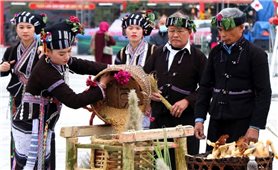
(DTTG) - Abstract: Although clothing and festivals are two distinct cultural elements, but they are closely interconnected. Festivals provide an environment where costumes clearly express their roles from various perspectives, while costumes contribute to showcasing the distinctive character of the festival. Preserving and promoting the value of traditional costumes is inseparable from preserving the festivals of ethnic minorities in Vietnam.
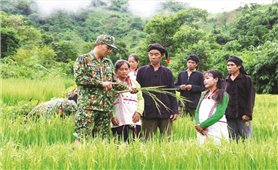
(DTTG) - Abstract: Sustainable poverty reduction is not only a socio-economic goal but also an important aspect of ensuring and promoting human rights, especially for ethnic minorities. In the context where the “core of poverty” in the country is concentrated mainly in ethnic minority and mountainous areas, the simultaneous implementation of the National Target Program for sustainable poverty Reduction and the National Target Program for socio-economic development of ethnic minority and mountainous areas for the period ogg 2021-2025 has created significant changes in income, living conditions and access to basic social services for ethnic minorities. From a human rights perspective, this article analyzes the theoretical and legal basis, evaluates the outstanding results in poverty reduction practice during the period of 2021-2025, at the same time clarifying the development in Vietnam’s policy thinking from ensuring social security to inclusive development, considering the poor, including ethnic minorities as the subjects of development.
English review |
Dr. Le Phu Thang - MA. Nguyen Duy Dung -
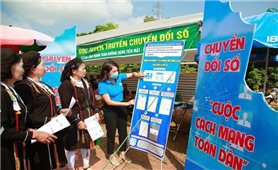
14:05, 02/05/2026 (DTTG) - Abstract: In the context of international integration and the strong impact of the Fourth Industrial Revolution, digital transformation is becoming an inevitable trend in reforming state governance, including the governance of ethnic affairs. This article focuses on analyzing the role and significance of digital transformation in improving the effectiveness and efficiency of ethnic affairs governance in Vietnam today, particularly in the planning, implementation and monitoring of policies. From there, the article suggests directions to promote digital transformation while ensuring inclusiveness, suitability to cultural and social characteristics, contributing to the modernization of ethnic affairs governance in the current integration context.
English review |
MA. Nguyen Thi Anh; MA. Nguyen Duy Dung ; MA. Vo Thi Thao Nguyen -
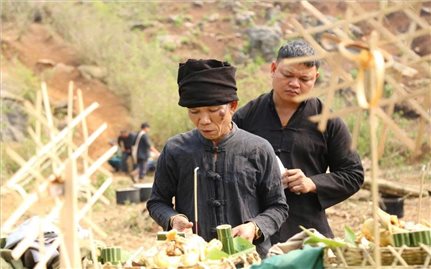
15:44, 08/04/2026 (DTTG) - Abstract: This article analyzes the interactive relationship between the traditional customs and practices of ethnic minority groups and the process of building new rural areas in Vietnam. Based on a cultural-development approach, the research indicates that the customary systems of ethnic minority communities are both an endogenous resource supporting the implementation of new rural development criteria and a potential barrier in terms of behavior, perception and social institutions. By identifying positive customary factors such as community cohesion, environmental protection and identity preservation, as well as negative factors such as outdated production practices, costly rituals and conflicts between customary and legal laws, this article proposes several flexible approaches suitable to the cultural context of ethnic minority and mountainous areas. Therefore, emphasizing the role of community-based development, local institutional improvement and the harmonious combination of preserving traditional culture with promoting innovation in building new rural areas in a sustainable and inclusive manner.

(DTTG) - Abstract: This article focuses on analyzing the outstanding achievements of Vietnam’s ethnic policy in recent decades, especially from the renovation period to the present. Through this, the author clarifies the positive changes in the socio-economic, cultural and educational lives of ethnic minority communities. However, in the context of a new era with many challenges, such as digital transformation, climate change, international integration and sustainable development,… ethnic policies are facing many issues that need further improvement. This article outlines the challenges and proposing several directions to improve the effectiveness of ethnic policies in the coming period.
