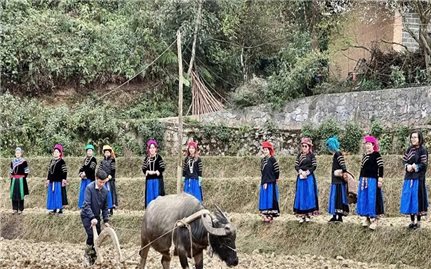
(DTTG) - In the lives of the Pu Peo ethnic group - one of the smallest ethnic groups in Vietnam - the Pat Oong ceremony (the ceremony of going to the fields) holds a particularly important place
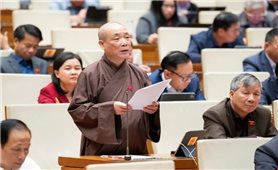
(DTTG) - On March 21st, 2026, the National Election Council officially announced the list of 500 delegates elected to the 16th National Assembly. The election results show that there are 6 religious leaders and many followers of various religions such as: Buddhism, Catholicism, and Brahmanism enjoy high levels of voter confidence, leading to their election as representatives in the highest state power agency.

(DTTG) - For the Cham Muslim community living in Chau Doc, An Giang province, tung lo mo (beef sausage) is one of the famous dishes, always appearing on the feast table in a simple yet profound, rustic yet rich in cultural identity. Tung Lo Mo originates from the name “tung laomaow”, but the Vietnamese pronunciation is a slight alteration. In the Cham language, “tung” means intestines and “laomaow” means cow. Therefore, “tung laomaow” translates to beef sausage in Vietnamese.

(DTTG) - For the Lo Lo people in the rocky mountains of Tuyen Quang province, festival cuisine is not simply about eating to satisfy hunger, but also about community memories and a binding thread. For the Lo Lo people in the rocky mountains of Tuyen Quang province, festival cuisine is not simply about eating to satisfy hunger, but also about community memories, a cultural bond, and a way for descendants to remember their roots.
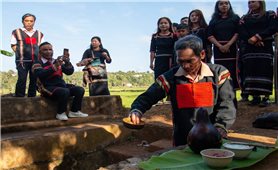
(DTTG) - When the spring breezes blow across the sun-drenched plateau, the coffee plantations begin to bloom with pristine white flowers, it is also the time when the E-de villages enter their most vibrant festival season of the year (from January to the end of March in the lunar calendar). In the warm atmosphere of the longhouse, amidst the resonant sounds of gongs and drums, the festival season is a sacred time for the community to express their faith, aspirations for prosperity, and strong bonds with the vast Central Highlands region.
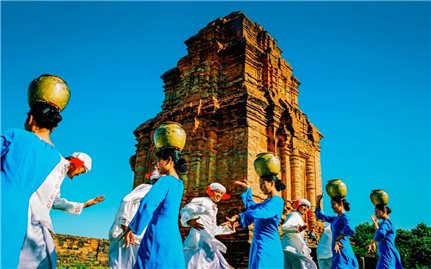
(DTTG) - Every year in the 7th month of the Cham calendar, when the golden sun still blazes down on the sand dunes of Khanh Hoa and Lam Dong, the Cham people enter the Ka-te festival - the biggest festival of the year, a festival of gratitude, reunion and aspiration for prosperity.
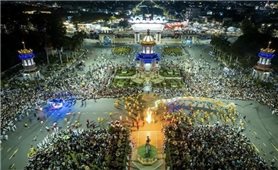
(DTTG) - Abstract: This article analyzes the value of filial piety in the context of the intersection between traditional Confucianism and Caodaism. In Confucianism, filial piety is the foundation of all social relationships, emphasizing respect, care and the preservation of one’s integrity towards one's parents even after their passing. Caodaism inherits these finest qualities but elevates filial piety to a core practice. Accordingly, filial piety is not limited to family duties (humanitarianism) but extends to love for humanity (great filial piety) and is a prerequisite for attaining the heavenly path. The article asserts that filial piety is the measure of a practitioner’s value and the spiritual bond connecting generations.
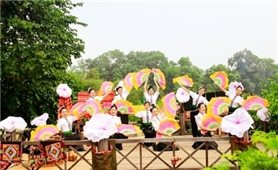
(DTTG) - The Xen ban, Xen muong festival of the Thai people is a sacred ritual to express gratitude to the deities and pray for peace and prosperity in the village. For the Thai people, this is not just a traditional festival, but also has the meaning of uniting the community, preserving identity and nurturing faith in the future.
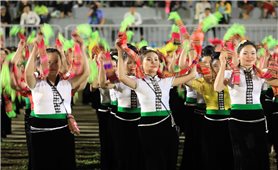
(DTTG) - Between the rhythmic sounds of drums, gongs and flutes, arms intertwine to form an endless circle, a sacred symbol of unity, faith and the aspiration for prosperity. That is the message of the Thai Xoe dance in the mountainous region of Northwest Vietnam.

(DTTG) - Abstract: In recent decades, the expression and practice of religion on the Internet has become a notable aspect of religious life, with the emergence of a phenomenon known as “digital religion”. This phenomenon has multifaceted impacts, not only in cyberspace but also in real life, transcending conventional geographical boundaries. Theoretical researchs over the past two decades have made significant contributions to identifying the nature and characteristics of the phenomenon of digital religion.
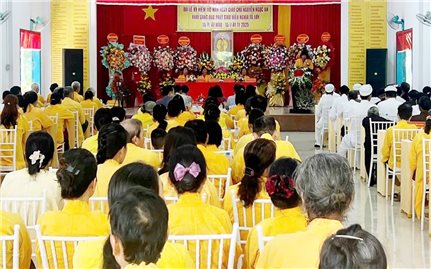
(DTTG) - Abstract: This article clarifies the characteristics of the scriptures and doctrines of Hieu Nghia Ta Lon Buddhism - an indigenous religion that emerged in Southern Vietnam in the early 20th century. The religious system does not have many scriptures, mainly inherited from Buddhism (such as the Sutra of Salvation from Suffering, the Universal Gate Sutra) and the works of Nguyen Ngoc An (Philosophical and Sacred Teachings, Religious Law), with content focusing on encouraging self-cultivation, teaching moral conduct, emphasizing filial piety and social responsibility. In terms of doctrine, this religion is a fusion of the Three Religions (Buddhism - Confucianism - Taoism) and folk beliefs, with the core principle of “learning Buddhism and cultivating virtue”. The teachings emphasize filial piety, righteousness, and the practice of the Four Gratitudes (gratitude to the country, ancestors and parents, the Three Jewels and fellow human beings). The path of spiritual practice primarily involves cultivating morality, living a virtuous life, maintaining close ties with family and society and is well-suited to life in the South (Vietnam).
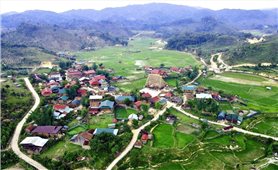
(DTTG) - Abstract: Ethnic minority communities play a central role in sustainable tourism development, especially in areas with unique cultural and ecological potential. As subjects of cultural resources, local knowledge and ecological space, ethnic minority communities not only participate in providing tourism products and services but also directly determine the authenticity, identity and attractiveness of the destination. This article focuses on clarifying the role of ethnic minority communities in preserving and promoting cultural and ecological values, managing resources and monitoring tourism activities in a sustainable manner. Identifying issues such as community capacity, benefit-sharing mechanisms and the risks of cultural commercialization. From there, the author proposes directions and solutions to strengthen the role of ethnic minority communities as key stakeholders, contributing to sustainable tourism development linked to cultural preservation and improving local livelihoods.

English review |
Dr. Phu Van Han* MA. Nguyen Duy Dung** MA. Vo Thi Thao Nguyen*** -
20:47, 13/05/2026 (DTTG) - Abstract: Ethnic minority languages are an important component of cultural identity and a repository of local knowledge for these communities. However, in the context of globalization, urbanization and the dramatic shift in communication spaces, many ethnic minority languages are facing the risk of decline and extinction. This article focuses on analyzing the models for preserving ethnic minority languages that have been and are being implemented, including community-based models, bilingual education, the application of digital technology and linking language preservation with economic and cultural development. Based on a synthesis and analysis of domestic and international studies, this article points out research gaps, particularly regarding the role of the community as the main actors in language preservation. Through this, the author emphasizes the need for a new approach to improve the effectiveness and sustainability of ethnic minority language preservation in the current context.
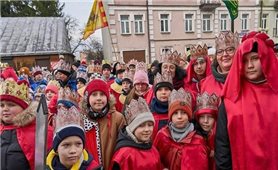
(DTTG) - Abstract: Poland is a Central European country with a long history, marked by ups and downs but leaving many important imprints on Europe and the world. Poland is a country deeply influenced by Catholicism. After 1945, Poland became a socialist country influenced by the Soviet Union in many aspects, including its understanding and treatment of religion. In 1989, Poland transitioned to a new political system that brought about changes in policy towards religion, particularly regarding constitutional principles and the relationship between the State and religion.
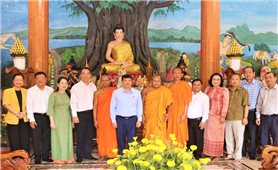
(DTTG) - Abstract: This article affirms the consistent policy and stance of the Vietnamese Party and State in ensuring freedom of belief and religion and promoting socio-economic development for the Khmer people. The author focuses on identifying and refuting the distorted narratives of hostile forces, particularly the “Khmer Krom Federation” (KKF), about human rights and religious freedom in the Southwestern region of Vietnam. Through the training of religious leaders, the restoration of temples, and the organization of traditional festivals such as the Kathina robe offering, the Khmer Theravada Buddhist tradition demonstrates a strong connection with national unity, contributing to maintaining political security and social order in the new context.
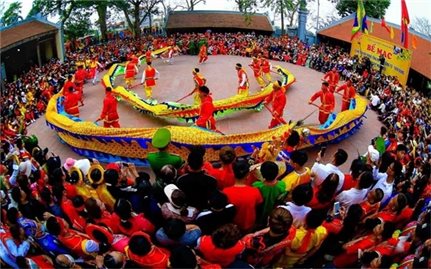
(DTTG) - Abstract: This article focuses on researching the role of contemporary grassroots cultural institutions in meeting the needs of ethnic minority communities for enjoying and creating cultural values; Analyzing the results achieved during the period of 2021-2025, this research proposes several solutions to improve the effectiveness of these institutions in the coming period.
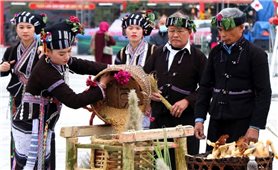
(DTTG) - Abstract: Although clothing and festivals are two distinct cultural elements, but they are closely interconnected. Festivals provide an environment where costumes clearly express their roles from various perspectives, while costumes contribute to showcasing the distinctive character of the festival. Preserving and promoting the value of traditional costumes is inseparable from preserving the festivals of ethnic minorities in Vietnam.

English review |
Dr. Le Phu Thang* ; MA. Nguyen Duy Dung* -
20:45, 09/05/2026 (DTTG) - Abstract: The cultural space of the Central Highlands’ gong culture is a vital foundation that determines the existence and continuity of this heritage in the community life of the local ethnic groups. This article approaches the preservation of gong culture from the perspective of preserving “cultural space”, considering this a prerequisite for gong culture to survive and adapt over time, rather than merely existing in the form of performances or documentary preservation. In the context of social change, urbanization, and the impact of the market economy, traditional living spaces associated with gongs are shrinking and becoming distorted, leading to the risk of a disruption in cultural practices. Based on an analysis of the organic relationship between gongs, village space, rituals, and the community, the author addresses the central role of the community in preserving the living space of heritage, while proposing conservation directions linked to daily life, sustainable development and adaptation to the current context.
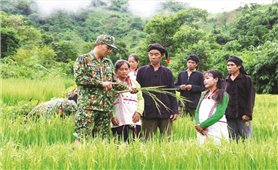
(DTTG) - Abstract: Sustainable poverty reduction is not only a socio-economic goal but also an important aspect of ensuring and promoting human rights, especially for ethnic minorities. In the context where the “core of poverty” in the country is concentrated mainly in ethnic minority and mountainous areas, the simultaneous implementation of the National Target Program for sustainable poverty Reduction and the National Target Program for socio-economic development of ethnic minority and mountainous areas for the period ogg 2021-2025 has created significant changes in income, living conditions and access to basic social services for ethnic minorities. From a human rights perspective, this article analyzes the theoretical and legal basis, evaluates the outstanding results in poverty reduction practice during the period of 2021-2025, at the same time clarifying the development in Vietnam’s policy thinking from ensuring social security to inclusive development, considering the poor, including ethnic minorities as the subjects of development.
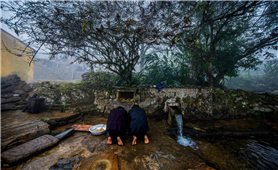
(DTTG) - Abstract: The Ha Nhi people in Lao Cai province, mainly belonging to the Black Ha Nhi ethnic group, living concentrated in the high mountainous area of Bat Xat commune. Through their long-term habitation and farming practices, this community has developed a close relationship with the forest, viewing it both as a living space and a sacred entity in their cultural and religious life. Based on their agricultural production experience and traditional beliefs, the Ha Nhi people have developed a rich system of folk knowledge in their interactions with the forest, expressed through community conventions, customary laws, religious rituals and farming practices aimed at rationally exploiting and sustainably protecting forest resources. This article focuses on analyzing the content and role of folk knowledge in forest protection among the Ha Nhi people, thereby clarifying the socio-cultural values and practical significance of this knowledge system for forest resource management and sustainable development in the locality today.
