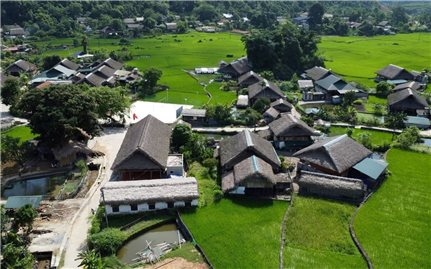
(DTTG) - The Tha village community cultural center (Ha Giang 1 ward, Tuyen Quang province) has just been honored as one of the 6 “Outstanding community tourism destinations that will welcome the most visitors nationwide in 2025”. The award, presented by the Vietnam Tourism Association, recognizes the continuous efforts of the local government and people in developing tourism associated with preserving national cultural identity.
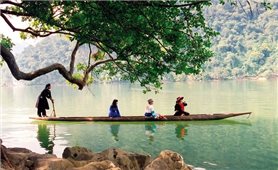
(DTTG) - Beyond simply reducing poverty, many localities in the northern mountainous region are gradually shifting from supporting livelihoods to building sustainable economic development models. From community tourism, organic farming, medicinal plant cultivation to forestry and OCOP products, many livelihood transformation models have proven effective, contributing to increased income, improved living standards, and creating momentum for development in ethnic minority and mountainous areas...

(DTTG) - Nestled amidst tranquil surroundings, Da pagoda holds an invisible yet enduring connection to the history of revolutionary Vietnamese journalism. For reporters and journalists who spend their days navigating the fast-paced flow of news, this is a place they return to find peace, balance and to light a candle of gratitude to previous generations. Da pagoda in Nghe An has long been a sacred site, a spiritual anchor for writers and a place of worship for more than 500 Vietnamese revolutionary journalist martyrs.
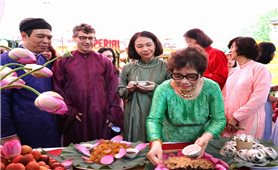
(DTTG) - As the golden sunlight of the fifth lunar month begins to cast its warm glow, Vietnamese people begin preparing for Doan Ngo festival (the Dragon Boat festival). More than just a milestone in the solar calendar, Doan Ngo festival (the Dragon Boat festival) preserves profound philosophies of life and the simple yet enduring spiritual beauty of the Vietnamese soul.
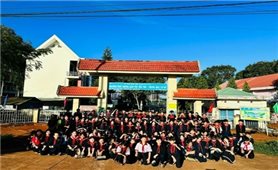
(DTTG) - Abstract: One of the perspectives on ethnic affairs in the new era, as expressed in Resolution No. 24-NQ/TW dated March 12th, 2003, of the 9th Central Committee of the Communist Party of Vietnam, is “paying attention to the development and training of human resources”. For ethnic minority and mountainous regions, the quality of human resources is both a bottleneck and a key to achieving breakthroughs. Based on a systematic analysis of the Party’s viewpoints, the State’s policies and analyzing practical experiences in education, vocational training and job creation for ethnic minorities over the past period, this article assesses the achievements and points out the shortcomings. From there, propose some solutions to train ethnic minority human resources with knowledge, skills and bravery to meet development requirements in the new era.
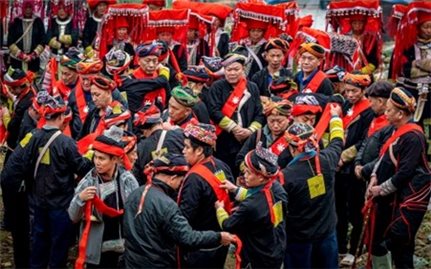
(DTTG) - Every spring, many families hold the coming-of-age ceremony, a sacred ritual marking the maturity of a Dao man. For the people, coming of age is not just a religious ritual, but a significant milestone in a person’s life, an affirmation of responsibility to family, lineage and community...
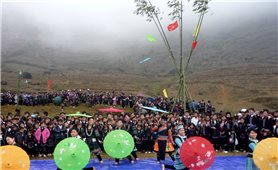
(DTTG) - When the rice paddies along the Muong Hoa stream are still covered with the first dew of spring, when wild peach blossoms and white plum blossoms burst forth across the mountain slopes, the Giay people in Lao Cai province joyfully enter the Roong Pooc festival, the biggest harvest festival of the year.
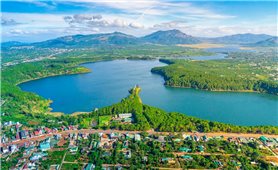
(DTTG) - In the early days of 2026, Ia Hiao commune (Gia Lai province) took on a new look as many key rural roads were officially completed. These roads are not only an achievement in infrastructure but also a vivid symbol of the unity and consensus between the Party committee, the government, and the local people. They serve as a foundation for policies and guidelines to be implemented, creating a combined strength in building new rural areas.
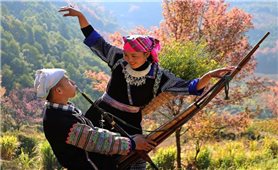
(DTTG) - Between the towering mountain ranges of Ha Giang old (now Tuyen Qung province), Son La, Dien Bien and Lao Cai, as the morning mist still lingers over the cornfields, a familiar sound resonates like the breath of the earth and sky, deep, resonant and deeply moving. It is the sound of the Mong flute (a type of bamboo flute). That sound is not just music; it’s also the voice of the heart, the memories, the soul of an entire community living in close connection with the mountains and forests.
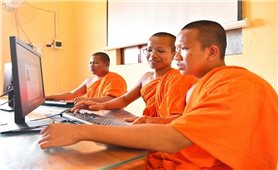
(DTTG) - Abstract: In the context of globalization and the rapid development of digital technology, media and social networks are having an increasingly profound impact on social life, including the religious fields. The emergence of online media platforms has transformed the way religion is disseminated, shifting from traditional forms to the digital space, contributing to expanded reach and increased interaction with the public. However, alongside the positive impacts in spreading religious teachings and moral values, the online environment also harbors many risks such as misinformation, radicalization of beliefs or the exploitation of religion for non-religious purposes. Therefore, a thorough understanding of the impacts of media and social networks on religious dissemination is essential to promote positive aspects and mitigate negative influences in the current context.
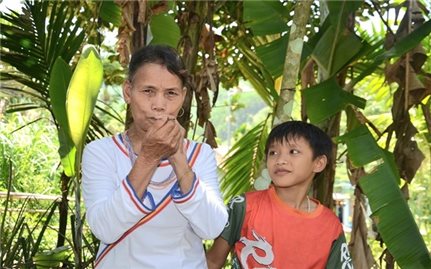
(DTTG) - At 71 years old, artisan Ho Thi De, a Cor ethnic woman from Nguyen village, Tra Hiep commune, Quang Ngai province still cherishes her A Map horn as a treasure of her life. For her, it is not just a musical instrument but also a close friend, a place to confide in and share the joys and sorrows of life.
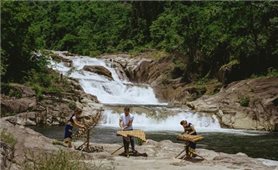
(DTTG) - Abstract: This article analyzes the promotion of the cultural values of ethnic minority communities as an important endogenous resource, contributing to the sustainable development of eco-cultural tourism. Based on an interdisciplinary approach between cultural studies, tourism studies, and sustainable development, the research clarifies the content of the cultural value system of ethnic minorities, including tangible and intangible values, local knowledge and lifestyles associated with the ecological environment. Through an analysis of the current situation, this article points out the potential as well as the challenges posed in the process of exploiting culture for tourism, especially the risk of commercialization and the decline in the authenticity of culture. From there, the author emphasizes the role of the community as the main actors in preserving and promoting cultural values, at the same time proposing directions and solutions to harmoniously integrate cultural preservation, ecological protection and tourism development, in order to improve livelihoods and promote sustainable development in ethnic minority and mountainous areas.
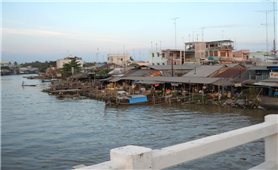
(DTTG) - Abstract: In the cultural landscape of the Southwestern region of Vietnam, rivers are not only geographical entities but also the source of settlement patterns and beliefs. The Long Ho River is not only an important waterway, at the same time to be a unique cultural and spiritual axis of Vinh Long province. Over hundreds of years of land reclamation, a dense system of historical sites has formed along both banks of this river, reflecting the rich spiritual life of the Kinh, Hoa and Khmer communities. This article analyzes the characteristics, values, and current state of the Long Ho riverside heritage site system from a landscape architecture perspective, and then proposes solutions to promote heritage values in conjunction with sustainable tourism development and urban beautification.
English review |
MA. Dao Dinh Hung*; MA. Nguyen Duy Dung* -
15:45, 22/06/2026 (DTTG) - Abstract: This article focuses on analyzing the relationship between preserving and promoting the traditional cultural values of ethnic minority communities associated with protecting the environment in the context of sustainable development. Through the study of local knowledge, rituals, living habits and ecologically adaptive resource exploitation methods and to clarify the role of culture as a mechanism for regulating behavior, contribute to maintaining ecological balance and limiting environmental degradation. At the same time, the article addresses the current state of traditional cultural values and the environment; the relationship between traditional culture and environmental protection; the environment as a space for nurturing culture;… Based on this, proposing solutions for preserving and promoting cultural values associated with protecting the environment, aiming to foster sustainable development in ethnic minority and mountainous areas.
English review |
Dr. Phung Quang Thien* MA. Nguyen Duy Dung** -
16:54, 20/06/2026 (DTTG) - Abstract: In the context of implementing ethnic policies towards integration and sustainable development, reforming the socio-economic governance methods of ethnic minority and mountainous areas has become an urgent requirement. This research focuses on clarifying the theoretical and practical basis of the transition from an administrative management model to a dynamic, modern, people-centered and community-based development management model. Based on an analysis of the limitations of traditional governance methods, this article emphasizes the significance of governance innovation in improving policy effectiveness, enhancing integration, coherence and uniformity, promoting inclusive development and narrowing regional disparities. At the same time, the research affirms that innovation in governance methods is not only a technical requirement but also a shift in development thinking, contributing to strengthening national unity and ensuring sustainable development in ethnic minority and mountainous areas in the current period.
English review |
Assoc. Prof. Dr. Nguyen Thanh Xuan -
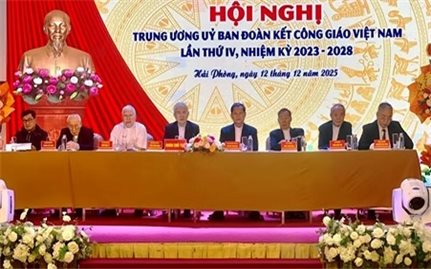
16:39, 20/06/2026 (DTTG) - Abstract: In Vietnam, Catholicism is a religion whose number of followers, clergy, scope of activities and social influence are second only to Buddhism. Specifically regarding Catholicism in Vietnam, besides the traditional organizational structure of the Church with dioceses and parishes, there is also a social organization established in 1955 that still exists today: the Vietnam Catholic Solidarity Committee. This article clarifies the 70-year history of the formation and development of the Vietnam Catholic Solidarity Committee from 1955 to 2025.
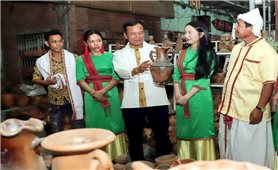
(DTTG) - Mr. Dang Chi Quyet, Head of Bau Truc Quarter, Head of the Bau Truc Pottery Village Community Tourism Management Board is a person who has devoted his life to preserving the Cham ethnic cultural identity.

(DTTG) - Abstract: Throughout human history, religion has always sought to adapt to various media to spread its faith, from animal skin manuscripts and the invention of the Gutenberg printing press to radio and television. However, the emergence of the Internet and cross-border platforms has created a true revolution. This article focuses on analyzing the shift of religious and spiritual activities from the physical to the online space in several countries. Despite facing numerous challenges regarding authenticity and network regulation, online religious activities are becoming an integral part of modern religious life, especially after the impact of the COVID-19 pandemic.

(DTTG) - Between the bustling life of Ho Chi Minh City, where food production areas spring up side-by-side with modern assembly lines, there is a noodle factory named Nguyen Binh that is quietly making its own mark. At the head of that noodle factory is Director Nguyen Binh, who brought the family’s traditional noodle-making craft from a northern noodle-making village and then persistently built a model of clean noodles, aiming for the international market.
(DTTG) - Abstract: Throughout various revolutionary periods, but Vietnam’s domestic policy has always been consistent: “The national question and national unity have always held a strategic position in the revolutionary cause. Implement the policy of ethnic equality, solidarity and mutual assistance for common development effectively”. In terms of foreign relations, Vietnam actively participates in international conventions on human rights, including the International Convention on the elimination of all forms of racial discrimination (CERD). This article focuses on analyzing and clarifying the consistent vision in Vietnam’s domestic and foreign policies regarding the protection of the rights of ethnic minorities.
