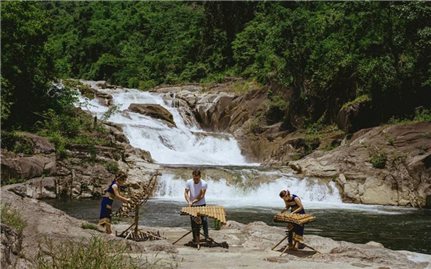
(DTTG) - Abstract: This article analyzes the promotion of the cultural values of ethnic minority communities as an important endogenous resource, contributing to the sustainable development of eco-cultural tourism. Based on an interdisciplinary approach between cultural studies, tourism studies, and sustainable development, the research clarifies the content of the cultural value system of ethnic minorities, including tangible and intangible values, local knowledge and lifestyles associated with the ecological environment. Through an analysis of the current situation, this article points out the potential as well as the challenges posed in the process of exploiting culture for tourism, especially the risk of commercialization and the decline in the authenticity of culture. From there, the author emphasizes the role of the community as the main actors in preserving and promoting cultural values, at the same time proposing directions and solutions to harmoniously integrate cultural preservation, ecological protection and tourism development, in order to improve livelihoods and promote sustainable development in ethnic minority and mountainous areas.
(DTTG) - Abstract: In the cultural landscape of the Southwestern region of Vietnam, rivers are not only geographical entities but also the source of settlement patterns and beliefs. The Long Ho River is not only an important waterway, at the same time to be a unique cultural and spiritual axis of Vinh Long province. Over hundreds of years of land reclamation, a dense system of historical sites has formed along both banks of this river, reflecting the rich spiritual life of the Kinh, Hoa and Khmer communities. This article analyzes the characteristics, values, and current state of the Long Ho riverside heritage site system from a landscape architecture perspective, and then proposes solutions to promote heritage values in conjunction with sustainable tourism development and urban beautification.
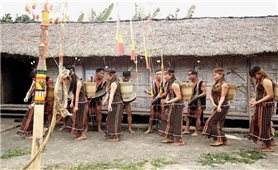
(DTTG) - Abstract: The Ma people’s Thanksgiving Ceremony to the Forest God in the Southern Central Highlands is a typical spiritual ritual, closely linked to the agricultural production cycle and traditional community life. This ritual not only reflects the belief in animism but also demonstrates the harmonious relationship between humans and the forest, the living space and the sacredness in the worldview of the Ma people. This article approaches the Forest God Thanksgiving ceremony from a cultural studies and religious anthropology perspective, aiming to clarify the context of its formation, the structure of the ritual and the symbolic meaning of the ritual practices within the traditional belief system of the Ma people. Based on this, the article contributes to identifying the value of the intangible cultural heritage of the Ma people, at the same time suggesting meaningful reference values for the preservation of ethnic culture, forest protection, and sustainable development in the Southern Central Highlands region today.
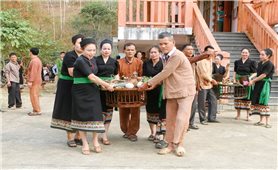
(DTTG) - When the first thunderclap tears through the mountains and forests of western Nghe An province, the O Du people in Van Mon village, Nga My commune, solemnly organize the New Year’s Thunder Festival (usually around Gregorian calendar’s February - March). The festival not only marks the transition of seasons, but also ushers in a new farming cycle, embodying the aspiration for a peaceful village, favorable weather, bountiful harvests and a prosperous life.
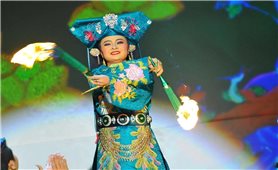
(DTTG) - Abstract: In the cultural landscape of the northern border region, the Four Palaces belief system in Lang Son province plays a crucial role as one of the important spiritual pillars, profoundly influencing the social structure and spiritual life of the multi-ethnic community. The role of the Four Palaces belief system in Lang Son province has unique characteristics, where spiritual beliefs are intertwined with a sense of border protection and a spirit of solidarity among the ethnic groups living in the area. This article focuses on analyzing the role of the Four Palaces Mother Goddess worship in the cultural and spiritual life of the communities in Lang Son province, clarifying how the Four Palaces belief system here not only preserves the core values of Vietnamese Mother Goddess religion but also adapting ethnic cultural elements to create a unique spiritual identity, thereby making a significant contribution to community and ethnic cohesion and the development of spiritual tourism in Lang Son province.
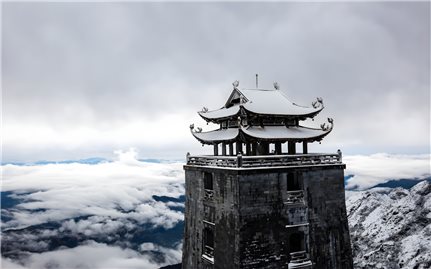
(DTTG) - In the flow of Vietnamese culture, the pagoda is not only a place of worship, but also the soul of the village, a spiritual anchor of the nation for thousands of years. But when the soaring, curved roofs of the pagoda are placed atop Fansipan, 3,143 meters above sea level, it is not just an architectural masterpiece, but also an epic tale of human will and the flourishing of Vietnamese Buddhismbetween the Northwestern landscape.
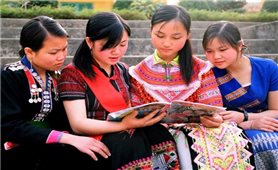
(DTTG) - Abstract: Conclusion No. 65-KL/TW dated October 30th, 2019, of the Politburo on continuing to implement Resolution No. 24-NQ/TW of the IXth Central Committee of the Party on ethnic affairs in the new situation requires: “Innovate the admission process by prioritizing the selection of ethnic minority students”. This is because the scholarship program is an important tool for ensuring fairness in access to higher education, at the same time creating a local workforce for ethnic minority and mountainous areas. This article analyzes the achievements, identifies the main “bottlenecks”, clarifies the causes from the perspective of public policy implementation, and then proposes directions for adjustment towards improving quality, linking training with human resource needs and the responsibility of utilization, contributing to the sustainable development of human resources in ethnic minority and mountainous areas today.

(DTTG) - This small jar of herbal salt is not simply a dipping sauce, which embodies a way of life in harmony with nature, and the solidarity between the Bana and Hre ethnic groups.
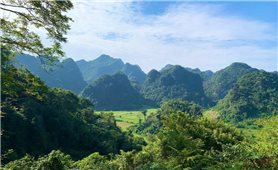
(DTTG) - For each of us, there are trips just “to see the world”, destinations where we take a few photos and then quickly leave, but there are also places like Lan Nong - a small residential area nestled between the mountains and forests of Cai Kinh commune, Lang Son province - that make us reluctant to leave.
English review |
Assoc. Prof. Dr. Nguyen Thanh Xuan * -
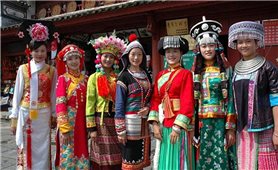
15:44, 08/06/2026 (DTTG) - Abstract: China (officially the People’s Republic of China) is the most ethnically diverse country in Asia in terms of ethnic minorities (collectively referred to as ethnic groups). The Chinese state, under different political systems has policies regarding ethnic groups. In particular, the current Chinese state has specific policies aimed at contributing to national stability and development in this new era.
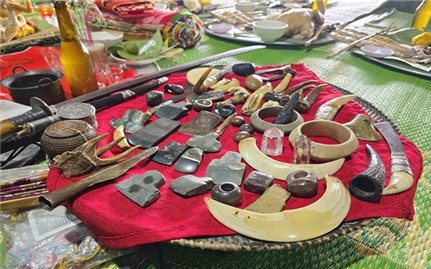
(DTTG) - In the spiritual space of the Muong people, the Khot bag of the shaman is always closely associated with rituals. Few people know that inside that bag lies a treasure trove of cultural codes, a convergence of ethnic knowledge, spiritual beliefs and rules of conduct towards the supernatural world, refined over time.
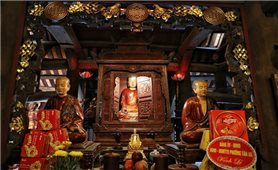
(DTTG) - Within the treasure trove of Vietnam’s spiritual and cultural heritage, there are artifacts that not only possess artistic value but also serve as a bridge connecting the past with the present, vividly demonstrating a purely Vietnamese philosophy of life. At Vinh Nghiem Pagoda, also known as La Pagoda, in Bac Ninh province today, the set of statues of the Three Patriarchs of Truc Lam is one such treasure. In March 2025, the set of statues of the Three Patriarchs of Truc Lam was officially recognized as a national treasure, which is not only a source of pride for the locality but also a significant milestone in the preservation of the Truc Lam Buddhist heritage, a Zen school founded by Vietnamese people.
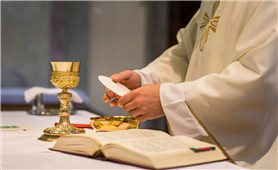
(DTTG) - In the long history of Christianity, the Eucharist has always been regarded as both the source and the summit. However, not everyone knows that Eucharistic adoration outside the scope of a Mass, such as Eucharistic adoration, processions or the placement of the Blessed Sacrament is a long journey of faith, moving from urgent pastoral needs to an explosion of fervent popular piety.
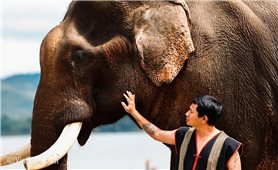
(DTTG) - With its rich cultural resources created by 18 ethnic groups, beautiful natural landscapes, and reputation for hunting and taming wild elephants, Buon Don commune in Dak Lak province possesses all the important elements to boost tourism development.
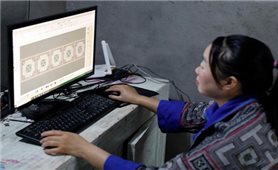
(DTTG) - Abstract: The local knowledge of ethnic minority communities is a unique resource, accumulated over a long historical process, closely linked to the natural conditions, ecological environment and cultural, social life of the community. In the context of current scientific and technological development and the demands of sustainable development, the application of science to preserve, promote and enhance the value of local knowledge has become a matter of profound theoretical and practical significance. This article analyzes the role of science and technology in systematizing, standardizing, digitizing and integrating local knowledge with modern science, thereby creating added value in production, livelihoods and cultural preservation. Based on an assessment of the current situation and the challenges faced, the research proposes directions and solutions to ensure the active participation of the community, harmonizing the preservation of local knowledge with innovation, contributing to the sustainable development of ethnic minority and mountainous areas.
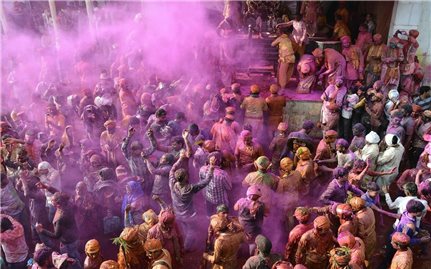
(DTTG) - The Holi festival in India is likened to a symphony of colors and a spirit of harmony. Between the bustling and diverse life of India, there is a moment when all boundaries of class, age and status dissolve beneath layers of vibrant colors. The Holi festival of colors is one of the most distinctive cultural and religious events, powerfully spreading the message of rebirth and altruism.
English review |
Lieutenant Colonel, MA. Hoang Duc Thanh* -
18:21, 30/05/2026 (DTTG) - Abstract: Promoting the role of ethnic minority communities in the economic development of mountainous regions is a key requirement to ensure inclusive and sustainable growth in the current context. Ethnic minority communities are not only beneficiaries of policies, but also possess important endogenous resources such as local knowledge, production experience, social capital and unique cultural values. This research adopts a community-based development approach, analyzing the role of ethnic minority communities in organizing production, managing and sustainably exploiting resources, as well as participating in the economic value chain of mountainous regions. Based on an assessment of the current situation and the challenges faced, this article emphasizes the need to shift from a support and subsidy-based approach to an approach that empowers, enhances capacity and unleashes the inherent potential of the community. Thus, the research contributes to providing scientific arguments for the planning of sustainable economic development policies for mountainous regions, with ethnic minority communities at the center.
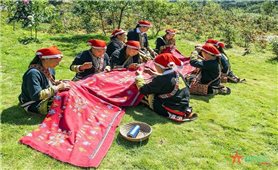
(DTTG) - Abstract: Traditional crafts of ethnic minorities are an important component of their cultural identity, at the same time to be a unique resource for socio-economic development in ethnic minority and mountainous areas. This article focuses on analyzing the value, role and potential of traditional crafts in ethnic minority communities for the development of cultural industries; it also points out the limitations and challenges posed in the process of conservation and promotion. Based on that, several solutions are proposed to effectively promote the traditional crafts of ethnic minority communities as an important resource for the development of cultural industries, linked to the goal of sustainable development.
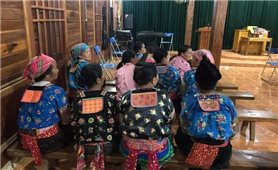
(DTTG) - Abstract: This article analyzes the process of introduction, development and impact of Protestantism on the lives of ethnic minority communities in The of northern mountainous region (Vietnam). Based on practical research, this article clarifies the influence of Protestantism on economic, moral, family and socio-cultural aspects of life. This confirms that Protestant moral values have contributed to changing the perceptions, behaviors and lifestyles of a segment of ethnic minority communities in a positive direction, in line with the process of modernization and social integration. At the same time, the article also raises some issues that need to be addressed in the state management of religion in this region.
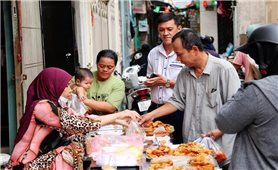
(DTTG) - Abstract: This research focuses on analyzing the pivotal role of the Cham community in the development of Halal tourism in Vietnam. With their advantage of Islamic religious life, unique cultural values, local knowledge and experience in practicing Halal standards, the Cham community plays a key role in the formation, operation and assurance of the authenticity of Halal tourism products. Through a community-based development approach, this article clarifies the contributions of the Cham community in service provision, cultural identity preservation and participation in tourism governance. Based on this, the author discusses the need to place the Cham community at the center of the Halal tourism development strategy, aiming to both promote local economic development and preserve and promote cultural and religious values in the context of current integration.
