
(DTTG) - In the journey to conquer demanding agricultural markets, the story of how Mr. Luu Lap Duc (born in 1992), Director of Agri Duc Tien Co., Ltd launched his business and achieved success has become an inspiring example. Not only a successful entrepreneur, Mr. Duc stands as a shining example of determination and intellect among the Tay ethnic community in Lam Dong province. With a distinctive vision, he has transformed the familiar vegetables and fruits of his homeland into high-quality, clean agricultural products, generating sustainable economic value for the entire community.

(DTTG) - From ancient Shan Tuyet tea trees growing on high mountain slopes, the people of Lien village (Bac Ha Commune, Lao Cai Province) produce organic tea that has achieved 5-star OCOP status and international certification, opening the door for the flavors of the mountains and forests to reach the global market.
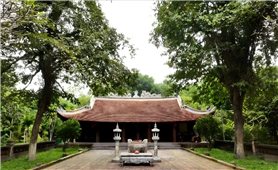
(DTTG) - Located in Xuan Lap commune (Thanh Hoa province), the Le Hoan temple is a prominent monument honoring the founding king of the Early Le Dynasty. A standout feature of the architectural complex is a 17th-century stone stele, erected during the Later Le Trung Hung Dynasty. The stele not only commemorates the achievements of Le Dai Hanh but also reflects the political and cultural vision of the dynasty.
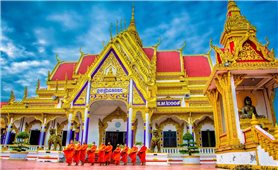
English review |
Assoc. Prof. Dr. Nguyen Thanh Xuan*; MA. Hoang Thi Hoa Ly** -
14:58, 22/08/2026 Abstract: The expansion of Vietnamese settlement was accompanied by the development of Buddhism encompassing both Northern and Southern traditions in Southern Vietnam. Buddhism in the region further expanded its influence during the Buddhist revival movement of the first half of the 20th century. Alongside its expansion and development, Buddhism in Southern Vietnam played a vital role in concert with the people nationwide in the success of the August Revolution (1945), the victorious resistance wars against French colonialism (1945-1954) and US imperialism (1954-1975) and the ultimate reunification of the country.
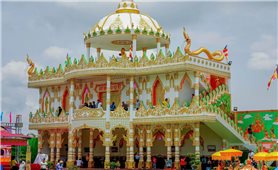
Abstract: The Theravada Buddhist cultural heritage of the Khmer community in Southern Vietnam constitutes a valuable heritage system that exerts a profound influence on the Vietnam Buddhist Sangha as a whole and more specifically on the region’s monks, nuns, lay Buddhists and local residents. Throughout the history of the Khmer people’s settlement, Theravada Buddhism has demonstrated teachings and cultural traits that align with the spiritual life of the local community. Consequently, the survival and development of Theravada Buddhism have been inextricably intertwined, deeply permeating the mindset, practices, and culture of the Khmer community. Given the value system of Theravada Buddhism, preserving and promoting this cultural heritage holds immense significance for the development of Vietnam’s religious landscape and the lives of its people.

(DTTG) - Travelers visiting Italy cannot miss Rome and once in Rome, a visit to the Vatican - the smallest and most peaceful nation on the planet is a must.

(DTTG) - The Cham people have a simple pastry that embodies the warmth of the earth, the heavens and the human heart: Ginrong Laya, also known as “ginger-root cake”. It is a traditional treat frequently prepared for festivals and important events, as well as for entertaining honored guests. Travelers from far and wide will long remember the rich aroma, satisfying crunch and deep significance of a gift that embodies the culture of a people dedicated to preserving traditional flavors between the pace of modern life.
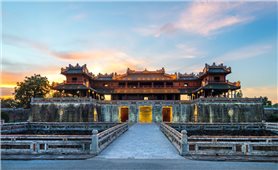
(DTTG) - The land offering ritual also known as Ta tho ky yen (offering thanks to the land and praying for peace) is a spiritual practice that originated from practical necessity and was sanctified over 700 years ago. When a group of people settled in a new area, they would seek permission from the local deities and the spirits of predecessors who had previously inhabited the land, asking for approval to live and work there, as well as for blessings ensuring domestic harmony and bountiful harvests.
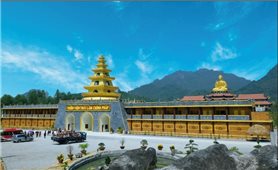
(DTTG) - Tuyen Quang is one of the impressive spiritual tourism destinations with many ancient and sacred pagodas, temples and shrines. Associated with Buddhist holidays, the Mother Goddess religion and anniversaries at historical and cultural sites are spiritual festivals rich in distinctive traditional culture.
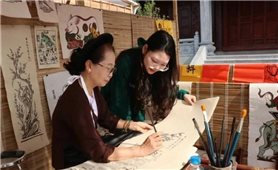
(DTTG) - The official inscription of the craft of making Dong Ho folk paintings on UNESCO’s List of Intangible Cultural Heritage in need of urgent safeguarding is not only a symbolic milestone but also opens a new phase of development for the preservation and promotion of this distinctive traditional art form. The series of cultural, artistic, and tourism activities held in Bac Ninh Province in late March 2026 serves as a clear testament to efforts to disseminate the heritage values of Dong Ho folk painting in a contemporary context.
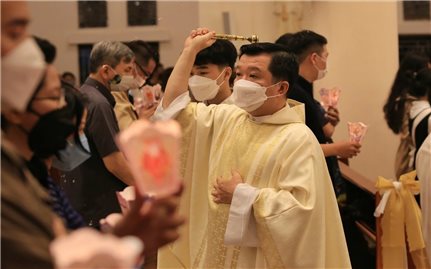
Abstract: Easter is the central event in the life of faith for Catholics, rooted in the belief in the resurrection of Jesus Christ, symbolizing the victory over death and the hope of eternal life. This article clarifies the origins, theological significance, and historical development of Easter rituals within Christianity. It also analyzes various representative practices from around the world to highlight the diversity and cultural adaptability of Catholicism. On this basis, the article focuses on elucidating characteristic symbols such as eggs, rabbits and Easter lilies and the ritual practices of Vietnamese Catholics, illustrating the blend of religious doctrine and national culture. Thereby, it affirms the religious, cultural and social significance of Easter in contemporary life.
English review |
Dr. Lò Giang Pao* ; MA. Nguyen Duy Dung** -
08:32, 17/08/2026 Abstract: In the context of the vigorous national digital transformation, building a digital ecosystem to foster sustainable development in ethnic minority and mountainous regions has become an urgent necessity to narrow the development gap, improve quality of life and harness the communities’ endogenous resources. The digital ecosystem comprising digital infrastructure, data, platforms, services and human resources serves as the foundation for the development of the digital economy, digital society and digital government. In recent years, many localities in ethnic minority and mountainous areas have progressively expanded telecommunications infrastructure, adopted e-commerce, digitized cultural data and provided online public services. The author analyzes the role and current state of, and proposes solutions for, building a comprehensive digital ecosystem, thereby contributing to the sustainable development of ethnic minority and mountainous areas in the current period of digital transformation and integration.

Abstract: Digital transformation is profoundly reshaping the livelihood structures of ethnic minority communities. While livelihoods previously relied primarily on subsistence agriculture, the exploitation of natural resources or low-skill labor, new forms of livelihood such as those based on digital content creation and e-commerce are now emerging. This article analyzes the impact of digital transformation on the livelihood structures of ethnic minority communities by examining the “Digital Content Creation Village” model in Lam Binh Commune, Tuyen Quang Province. The findings indicate that digital transformation not only generates additional income but also alters livelihood structures, labor patterns, social roles and market participation methods among ethnic minority populations.
English review |
Dr. Phung Quang Thien*; MA. Nguyen Duy Dung** -
14:28, 15/08/2026 (DTTG) - Abstract: In the context of digital transformation, international integration and increasingly extensive demands for sustainable development, innovating the mindset and implementation methods regarding ethnic minority policies has become essential to enhancing governance effectiveness and leveraging the internal strengths of ethnic minority and mountainous areas. The article analyzes the necessity of shifting from a mindset of passive assistance to one of sustainable development, specifically one that places people at the center and communities as the primary agents of the development process. It also emphasizes the need to innovate policy implementation methods by ensuring synchronization, digitalization and transparency, at the same time strengthening decentralization linked to local accountability. This affirms that innovating the mindset and implementation methods regarding ethnic minority policies not only enhances practical effectiveness but also establishes a sustainable foundation for strengthening the great national unity bloc in the new period.

English review |
Dr. Le Phe Thang*; MA. Nguyen Thi Diep** -
14:25, 15/08/2026 Abstract: In the context of national digital transformation and the development of the digital economy, connecting OCOP products from ethnic minority and mountainous areas to e-commerce platforms is emerging as a crucial solution for expanding markets, enhancing product value and fostering local economic development. Leveraging local knowledge, cultural identity and distinctive raw materials, many OCOP products from ethnic minority communities have gradually gained access to e-commerce platforms, thereby boosting revenue, building brand recognition and creating sustainable livelihoods for local residents. This article analyzes the role and current state of connecting OCOP products via digital platforms, evaluates associated opportunities and challenges, and proposes key solutions to enhance the effectiveness of e-commerce adoption. In doing so, it contributes to fostering digital transformation, developing community-based economies and achieving sustainable poverty reduction in ethnic minority and mountainous areas.

Abstract: This article analyzes the diverse and profound spiritual landscape of Myanmar, a nation known as the “Land of pagodas”. The article delves into the interplay between Theravada Buddhism, the dominant ideology shaping national identity and the indigenous belief system centered on the worship of Nat spirits. In doing so, the study elucidates how religion shapes the social and political structures as well as the daily lives of the people of Myanmar. Additionally, the article examines the presence of other faiths such as Christianity, Islam and Hinduism within the country’s multi-ethnic context, aiming to provide a comprehensive yet in-depth overview of the belief ecosystem in this Southeast Asian nation.
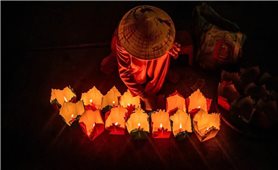
Abstract: The article conducts in-depth research on the Vu Lan ceremony from the perspective of religion and culture. On the basis of clarifying the origin of Buddhist scriptures (Vu Lan Pen Sutra) and the transformation from Indian thought into the Vietnamese cultural space, the author analyzes the essential meaning of filial piety in Buddhism and its organic blend with the Vietnamese tradition of Ancestor worship, “drinking water, remembering the source”. Research indicates that Vu Lan extends beyond a sectarian religious ritual to become a core element of Vietnam’s social and ethical values, contributing to the cohesion of families and lineages while transforming individual consciousness in the contemporary context. This article provides an in-depth analysis of the ideological structure of filial piety in Buddhism, the process of Vietnamizing the Vu Lan ritual and the enduring value of this moral virtue in the spiritual life of the Vietnamese people, spanning from tradition to modernity.
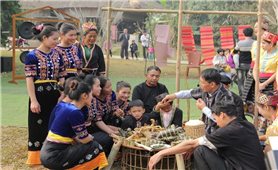
Abstract: The article focuses on analyzing the current state of developing and refining institutions and policies for the cultural development of ethnic minorities during the period of 2021-2025. Based on the direction set forth in the Resolution of the 14th National Party Congress and Resolution No. 80-NQ/TW dated January 7th, 2026, of the Politburo regarding the development of Vietnamese culture, this article proposes several solutions to further refine the legal framework for the period of 2026-2031. The focus is on prioritizing resources for the preservation of ethnic minority cultures in conjunction with sustainable livelihoods, decentralizing management and maximizing the role of the community and artisans as key agents.
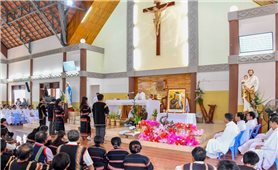
Abstract: This article examines the process and consequences of the interaction between local beliefs (animism) and engaged religions (primarily Catholicism and Protestantism) in the Central Highlands. Through the analysis of social structure, ethnic psychology and cultural changes, we clarify the mechanism of "acculturation" and the formation of mixed religious forms. The article emphasizes that this interference is not just a process of belief replacement but a strategic adaptation, helping ethnic minorities maintain their identity in the context of modernization and integration.
English review |
Dr. Ly Thi Thu*; Hoang Thi Phuong Lien** -
15:12, 10/08/2026 Abstract: In the context of developing a socialist-oriented market economy, deep international integration, and rapid social change, the task of consolidating national unity is posing new, profound and broader demands. One of the key factors determining the nature of national unity is the degree of equality in opportunities for development and quality of life among different regions and ethnic groups.
