English review |
MA, PhD Candidate. Nguyen Thuy Duyen* -
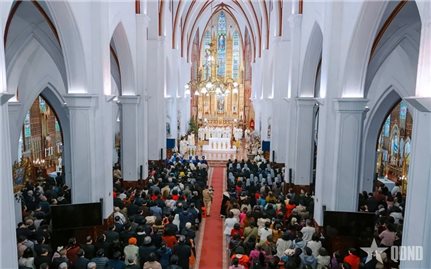
15:11, 10/08/2026 Abstract: Religion is a vital component of culture and religion itself constitutes a form of culture. Catholicism is a major religion with a long-standing cultural identity and profound global influence. Core perspectives on Catholic culture are found in the Bible and the Church’s magisterial documents. Accordingly, the Church affirms that culture serves as a central factor capable of either fostering or hindering social progress. Among the elements constituting culture, the Church prioritizes morality and truth, regarding them as the core components of a humanistic culture. Over nearly five centuries of introduction and development in Vietnam, the inculturation of Catholicism navigating various ups and downs and challenges has successfully affirmed positive values within Vietnamese culture while proactively undergoing “Vietnamization” in a spirit of accompanying the nation.
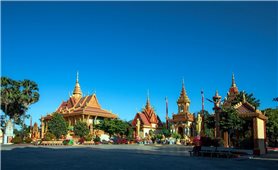
Abstract: This article provides an in-depth analysis of the multifaceted role of the pagoda in the lives of the Khmer community in Southern Vietnam. Beyond being a distinctive architectural masterpiece adhering to rigorous aesthetic standards, the Khmer pagoda serves as the spiritual and cultural hub of the community. By analyzing architectural symbols such as pagoda roofs, towers and sacred animal figures as well as social functions, the article asserts that the pagoda serves as the soul of the community, a bond strengthening solidarity and a repository for the Khmer people’s cultural identity amidst the changing times.
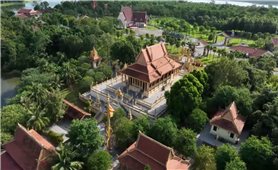
Abstract: The article focuses on clarifying the theoretical and practical foundations of cultural tourism; analyzing cultural tourism resources and the current state of its development; assessing the multidimensional impacts of cultural tourism on socio-economic development and cultural preservation in ethnic minority and mountainous areas during the country’s new era.
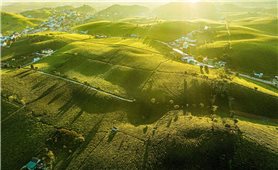
(DTTG) - Despite being a mountainous border province, Son La province has risen to become the largest fruit-growing region in the North and the second-largest in the country. The province is striving to become a processing hub for agricultural products for the Northern Midlands and Mountainous region.
English review |
Dr. Lo Giang Pao* ; MA. Nguyen Duy Dung** -
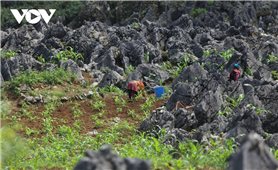
23:31, 06/08/2026 Abstract: This research analyzes the role of the Mong people’s folk knowledge as an endogenous resource for climate change adaptation in the Northern mountainous region. The article views this indigenous knowledge not merely as traditional experience, but as a system of practical knowledge accumulated over generations, deeply rooted in natural conditions and community livelihoods. Areas such as weather forecasting, upland farming, resource management and the organization of daily life are viewed as concrete manifestations of adaptive capacity. In this context, folk knowledge contributes to mitigating disaster risks, enhancing resilience, and sustaining livelihoods. However, processes of social change are eroding the transmission of this knowledge. Therefore, it is essential to preserve folk knowledge and integrate it into current climate change adaptation strategies.
English review |
Dr. Phu Van Han* ; MA. Nguyen Duy Dung** -
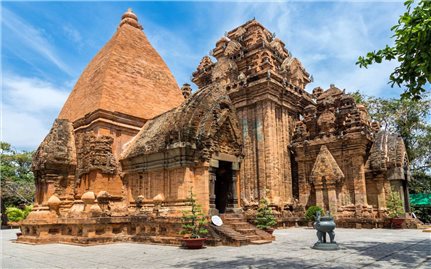
11:42, 05/08/2026 Abstract: Khanh Hoa province is one of the localities that preserves many distinctive values of Cham culture, notably its system of architectural and religious sites, traditional festivals and forms of intangible cultural heritage that hold profound historical, artistic and humanistic significance. This article analyzes the role of preserving and promoting Cham cultural values in local tourism development, at the same time also assessing the current state of utilizing Cham cultural heritage for tourism activities in Khanh Hoa province. Research findings indicate that Cham cultural heritage not only contributes to preserving ethnic cultural identity but also creates distinctive tourism products, enhancing destination appeal and fosters sustainable tourism development. Based on this, the author proposes several solutions to harmoniously integrate heritage preservation with tourism development in the current context.
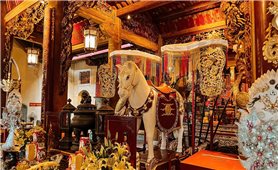
Abstract: This article focuses on an in-depth analysis of the Thang Long Four Fortresses (Thanh Long Tu Tran) system, the four sacred temples surrounding the ancient Thang Long capital consisted of temples such as: Bach Ma, Voi Phuc, Kim Lien and Quan Thanh. From a religious and cultural studies perspective, this article clarifies the role of the Four Fortresses (the Four Guardian temples) not only as administrative geographical boundaries but also as a unique spiritual and cultural institution, reflecting the wise thinking of the Vietnamese people in guarding and protecting the capital city. This article delves into an analysis of the historical, architectural and artistic values, and especially the value of community connection through religious practices, thereby affirming the position of the Four Fortresses in the national cultural heritage.
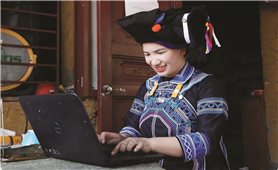
Abstract: The right to access information is one of the basic rights of citizens, recognized by the Constitution and laws of Vietnam and to be an important condition for people to exercise other rights and participate in the country’s political and social life. For ethnic minorities, this right is especially significant given the unequal socio-economic conditions, information infrastructure and access to information. This article analyzes the policy and legal framework for ensuring the right of ethnic minorities to access information; it assesses the practical results of implementation over the past period to clearly see Vietnam's efforts, especially those of the Ministry of Ethnic and Religious Affairs, in ensuring the right of ethnic minorities to access information in a substantive and effective manner.
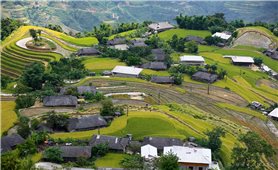
Abstract: The 53 ethnic minority groups in Vietnam mainly reside in the midland, mountainous and border regions - areas of strategic importance in terms of economics, national defense, security and ecological environment. Recognizing this characteristic, since 2003, Resolution No. 24-NQ/TW of the 9th Central Committee of the Communist Party of Vietnam has affirmed: “Our Party has always determined that the issue of ethnicity, ethnic affairs and the unity of ethnic groups have a strategically important position in our country’s revolution”. Based on an analysis of the system of ethnic policies and guidelines during the reform period and the achievements in the economic, social and cultural fields, this article clarifies the consistency of the principle of equality among ethnic groups, the efforts to narrow the development gap and the guarantee of human rights for ethnic minorities. Based on practical evidence, this article contributes to refuting the distorted claims that “racial discrimination” exists in Vietnam, affirming that Vietnam’s ethnic policy aims at genuine equality, strengthening national unity and promoting sustainable national developmen.
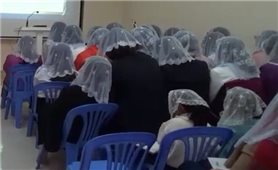
Abstract: Since the 1990s, “new religious phenomena”, or unconventional religions and sects, have emerged and developed in Vietnam and many other countries around the world. The activities of this phenomenon in our country have had a significant impact on the economy, culture, and society, especially the extremist forms of “new religious phenomena”. Therefore, in current state management, identifying, addressing and responding to new religious phenomena in Vietnam is a necessary issue.
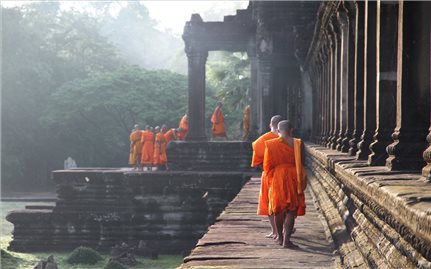
Abstract: Cambodia is one of the three Indochinese countries and a member of the Association of Southeast Asian Nations (ASEAN). Cambodia is a country with unique characteristics in terms of history, ethnicity, culture and religion. In terms of religion, Theravada Buddhism is the dominant religion and forms the cultural foundation and way of life for the Cambodian people. Although Buddhism is recognized as the state religion, Cambodia maintains religious freedom and equality among religions. This is one of the distinctive features of religious policy in Southeast Asian countries.
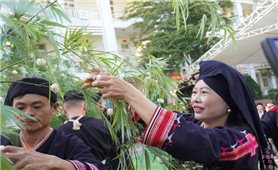
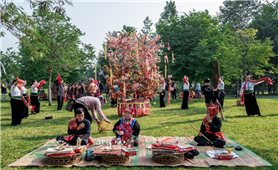
(DTTG) - Approximately every 3-4 years, the Pung Hieng Festival, also known as the Lower Year Festival, is organized by the Dao Tien people in the communes of Doan Ket, Tan Yen, Thao Nguyen and Van Son in Son La province. The festival takes place from the 29th day of the lunar year to the 2nd day of the Lunar New Year. Through the festival, the belief in ancestor worship and deities, along with the spirit of family and ethnic unity is preserved and promoted.
English review |
Lieutenant Colonel, MA. Hoang Duc Thanh*; MA. Nguyen Duy Dung** -
14:35, 27/07/2026 Abstract: In the context of strong international integration and digital transformation, digital media is increasingly asserting its important role in promoting the culture of ethnic minority communities. This article focuses on analyzing the role of digital media as an effective tool in expanding the reach of cultural dissemination, transcending geographical boundaries and bringing local cultural values closer to the international community. Through digital platforms and multimedia technologies, the tangible and intangible cultural heritage of ethnic minorities is digitized, preserved, and vividly transmitted, contributing to raising awareness, promoting dialogue and fostering cultural exchange between countries. However, the article also points out the challenges such as the risk of commercialization, identity distortion and the digital divide. Based on this, the author emphasizes the need to promote digital media in a targeted manner, closely linking cultural promotion, preservation and sustainable development in the context of international integration.

(DTTG) - In the land that once nurtured the Tay Son rebels, sugarcane has become a pillar of the economy, helping ethnic minority communities stabilize their livelihoods and contributing to the renowned An Khe sugar brand.
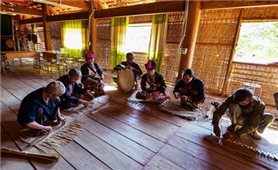
(DTTG) - For the Kho-mu people of Keo village, the craft of weaving has existed for a very long time, passed down from generation to generation primarily through the “father-to-son” tradition. For the Kho-mu people in Keo village, the craft of weaving is not simply a job of creating household items, but a measure of skill and patience. The image of elderly people sitting on the porch of their stilt houses, their thin hands nimbly shaping each bamboo strip is a familiar sight in the village.
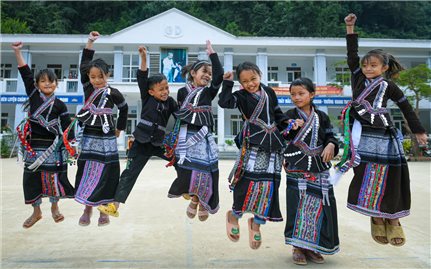
Abstract: At its 10th session, the 15th National Assembly decided to integrate three National Target Programs: New Rural Development, Sustainable Poverty Reduction and Socio-Economic Development in ethnic minority and mountainous areas into a single National Target Program on New Rural Development, Sustainable Poverty Reduction and Socio-Economic Development in ethnic minority and mountainous areas for the period of 2026-2030. This integration is necessary and is expected to create sustainable development for ethnic minority and mountainous areas in the future.
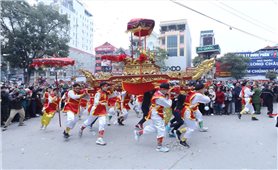
(DTTG) - Every January, when the gentle chill still lingers on the gray rocky mountain slopes and the wild peach blossoms have just begun to open, Lang Son province enters its most beautiful season of the year. The borderland awakens to the sound of festival drums and throngs of people flocking to the two ancient temples along the Ky Cung River. There, the Ky Cung - Ta Phu festival takes place, marking the beginning of a new spring, opening up both historical memories and the rhythm of modern life.
English review |
Dr. Le Phu Thang; MA. Nguyen Duy Dung -
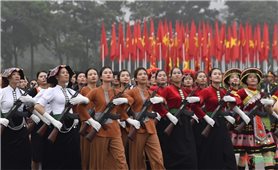
15:08, 24/07/2026 Abstract: Throughout history, from the early states to the current period of reform and international integration, unity has always been the source of national strength and the decisive factor in all victories in the cause of building, protecting, and developing the country. This article analyzes the characteristics of national unity, from political consensus and unity of will within the political system to cultural and social cohesion among ethnic communities. At the same time, it also clarifies the need to strengthen unity in the context of globalization, in order to ensure sustainable development and safeguard national sovereignty.
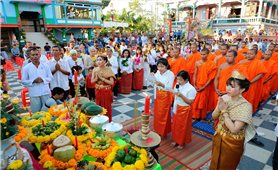
Abstract: The Khmer are an ethnic group belonging to the Mon-Khmer language family, who have long resided in Southern Vietnam and possess a rich and diverse traditional culture with many unique values. Among these, agricultural rituals play a central role in the cultural and religious life of the Khmer people in Southern Vietnam, today still hold many positive values for community life. These rituals reflect the dialectical relationship between humans and nature in the context of rice cultivation and are an important method for strengthening social structure, maintaining cultural identity and educating community morality. This article focuses on analyzing the identity and value of Khmer agricultural rituals in Southern Vietnam and some solutions for their preservation and promotion in the context of current socio-economic integration and transformation.
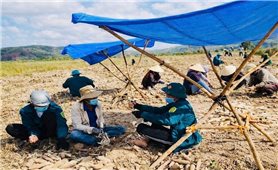
(DTTG) - As the dry season sun bathes the western fields of Gia Lai province in golden light, the Gia-rai and Bana ethnic groups enter the cassava harvest season with a bustling and urgent atmosphere. On the hillsides, cassava is harvested, processed and dried right on the spot. More than just a means of livelihood, the cassava harvest season also brings hope for a stable income, contributing to improving the lives of many families.
