English review |
Dr. Phu Van Han; MA. Nguyen Duy Dung; Lieutenant Colonel, MA. Hoang Duc Thanh -
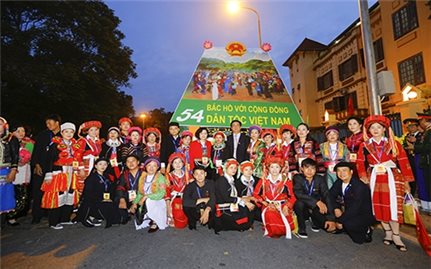
14:50, 22/07/2026 Abstract: Throughout the long history of nation-building and national defense of the Vietnamese people, the close ties and companionship between ethnic groups and religions with the destiny of the nation have always been a distinctive feature, vividly demonstrating the strength of the great national unity. In the current context, when the country is entering a new stage of development, with high requirements for international integration, sustainable development and maintaining socio-political stability, the accompanying role of ethnic groups and religions has become more important than ever.
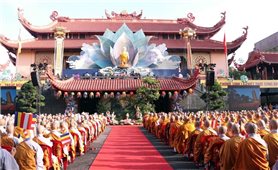
Abstract: Vietnamese Buddhism is a religion with a tradition of “protecting the nation and ensuring the well-being of the people, accompanying the nation”, has always been closely linked to the destiny of the country. History has proven that when the country is strong, Buddhism flourishes; when the Fatherland is in danger, Buddhism always stands side by side with the nation, ready to stand up and participate in fighting against foreign invaders, contributing to regaining independence for the country. Inheriting and developing the glorious traditions of Vietnamese Buddhism, the Vietnam Buddhist Sangha has accompanied the people of the whole country in carrying out the reform process in a spirit of harmony and solidarity and with the motto “serving the religion, loving the country”. The Vietnam Buddhist Church has directed its branches at all levels to promote the role and resources of the Church in building and protecting the Fatherland; Participating in social activities: healthcare, education, social welfare, vocational training, charity and humanitarian work, environmental protection, climate change response, with particular attention to building national unity.
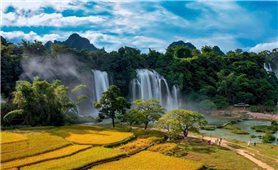
Abstract: This article primarily uses a qualitative approach to analyze potential factors, collecting data from two main sources: secondary sources (planning documents, socio-economic reports, historical texts related to Ca Thanh commune, Cao Bang province) and primary sources collected through field surveys and in-depth interviews with stakeholders including cultural management officials, local people, tourists and tourism experts. The collected data will be processed using synthesis, comparison and especially WOT (Strengths, weaknesses, opportunities, threats) analysis to comprehensively analyze and assess the potential for community tourism development in Ca Thanh commune, as well as its limitations and challenges, based on this, several solutions for developing community tourism are proposed to effectively exploit cultural identity, promote the role of the community, improve infrastructure, diversify products and promote policies supporting sustainable tourism development.
English review |
MA. Le Thi Ly; MA. Phung Thi Thanh Loan -
18:10, 19/07/2026 Abstract: Vietnam is a multi-religious country. Throughout the nation's history, religions have made contributions in many aspects, most notably in culture and ethics. Cultural and religious values have contributed to shaping the cultural identity of the Vietnamese nation. The contribution of religion in each historical period depends largely on how the State views and treats religion, and the attitudes of the religions themselves.
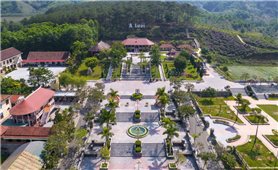
(DTTG) - After 5 years of implementing National Target Program 1719 on socio-economic development in ethnic minority and mountainous areas, Hue City has achieved and exceeded the target of reducing the poverty rate in ethnic minority areas.
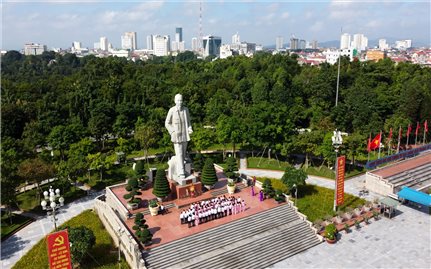
(DTTG) - In the vigorous flow of national construction and development, studying and following Ho Chi Minh’s ideology, ethics and style has always been identified as a central and continuous task. One of the innovative and effective models contributing to bringing the cultural and ideological values of President Ho Chi Minh closer to all levels of society, especially people of various religions and beliefs, is the construction and dissemination of “Ho Chi Minh Cultural Spaces” right at places of worship.
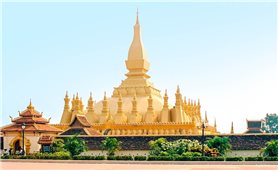
Abstract: Religion is a human need and an existing entity in society. Currently, all countries and territories in the world have religions and people who follow different religions. However, depending on their historical, cultural, and political characteristics, each country has different policies and approaches to religion. This article provides an overview of laws related to religion and the management of religious activities in several Asian countries - some experiences worth considering.
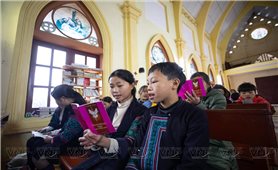
Abstract: Integrating Catholic culture with the preservation and promotion of national culture is a matter of significant importance in the current context of globalization and international integration. In Vietnam, Catholicism is a major religion with a long history of formation and development, closely intertwined with the social and cultural life of the nation. Throughout its existence and development, Catholicism has not only carried its own unique religious and cultural values but has also gradually adapted, transformed and integrated with the traditional cultural values of the Vietnamese nation.
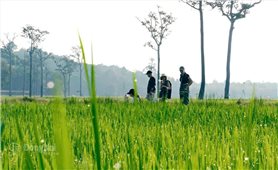
(DTTG) - Located in the buffer zone of Cat Tien National Park, Ta Lai commune (Dong Nai province) is not only home to more than 2,000 Ma and S'tieng ethnic people but also a treasure trove preserving traditional cultural values that have existed for hundreds of years. With its pristine natural landscape, the winding Dong Nai River and unique cultural features, Ta Lai village has become a cultural tourism destination attracting many domestic and international visitors.
English review |
Lieutenant Colonel, MA. Hoang Duc Thanh -
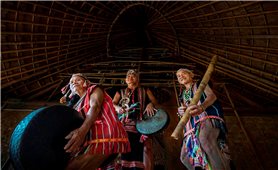
17:08, 12/07/2026 Abstract: This article focuses on analyzing the requirements for linking sustainable socio-economic development with ensuring security and national defense in the Central Highlands region in the context of deep international integration. Based on an analysis of the region's geopolitical position, economic potential, and socio-cultural characteristics, this study clarifies the dialectical relationship between development and protection, particularly in the face of new challenges such as resource depletion, climate change, non-traditional security threats and the impact of regional strategic competition. Therefore, the article points out the limitations in the coordination mechanism for development and protection, and proposes a system of solutions to strengthen governance capacity, consolidate the national defense and security posture and ensure sustainable development and long-term stability in the Central Highlands region.
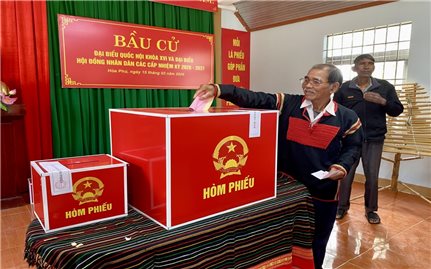
Abstract: This article analyzes the legal basis for the right to vote and stand for election - an important political right of ethnic minorities in Vietnam; Conditions for ensuring the exercise of this right in the election of deputies to the 16th National Assembly and deputies to People’s Councils at all levels for the term of 2026-2031.
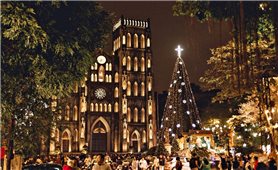
Abstract: On March 4th, 2026, the U.S. Commission on International Religious Freedom (USCIRF) released its “Annual Report on the State of International Religious Freedom in 2025,” with negative assessments of the religious freedom situation in Vietnam. Similar to previous reports, in its report on religious freedom in Vietnam, USCIRF continues to make biased assessments based on inaccurate and one-sided information, aiming to interfere in internal affairs and undermine Vietnam’s reputation internationally. Approaching from the perspective of religious freedom, this article presents some findings reflecting Vietnam’s efforts to demonstrate respect for and guarantee this right over the past eight years of implementing the Law on Religion and Belief. These achievements completely refute the erroneous and ill-intentioned assessments of US CIRF regarding religious freedom in Vietnam.
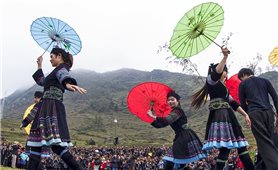
(DTTG) - While the fields of yellow mustard flowers are still in full bloom on the mountain slopes, and white clouds gently embrace the highland villages of Tuyen Quang, the Mong people joyfully enter the Gau Tao festival, the biggest festival of the year for praying for blessings and good fortune. For the Mong people, Gau Tao is not only a spring festival, but also a sacred moment to express their hopes for health, happiness, and a prosperous and sustainable life.
English review |
Assoc. Prof. Dr. Nguyen Thanh Xuan -
09:38, 09/07/2026 Abstract: China (officially the People’s Republic of China) is the most ethnically diverse country in Asia in terms of ethnic minorities (collectively referred to as ethnic groups). The Chinese state, under different political systems, has policies regarding ethnic groups. In particular, the current Chinese state has specific policies aimed at contributing to national stability and development in this new era.
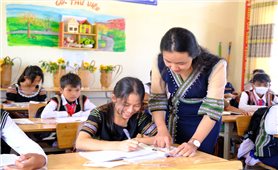
Abstract: This article analyzes the current state of education and training in ethnic minority and mountainous regions based on the results of a survey collecting socio-economic information from 53 ethnic minority groups that has been recently reviewed and updated, along with the potential impact of Resolution No. 71-NQ/TW dated August 22nd, 2025, of the Politburo on the development of education and training in ethnic minority and mountainous areas.
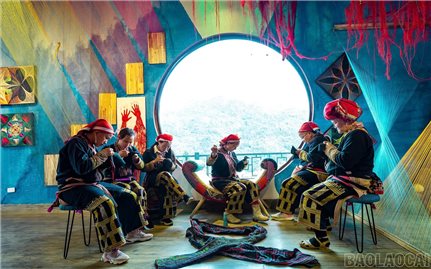
Abstract: Lao Cai is a land rich in historical traditions and diverse cultural identities, with 34 ethnic groups living together. From the perspective that culture is both a goal and a driving force for development, the locality has implemented many innovative models to preserve heritage while promoting sustainable tourism. This article analyzes the core points in the cultural preservation strategy of ethnic minorities in Lao Cai province, from restoring festivals, traditional crafts and folk knowledge to promoting the role of communities and artisans. From this, we can draw profound lessons and offer some suggestions to further transform culture into an endogenous resource, creating momentum for rapid and sustainable socio-economic development.
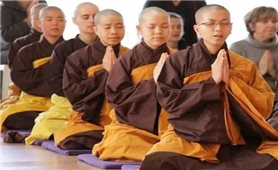
(DTTG) - Abstract: This article analyzes the concept of gender equality through the lens of three major religious systems: Buddhism, Catholicism and Islam. The article points out that the core doctrines of these religions all contain humanistic elements of spiritual equality. It also outlines the challenges and trends in the new era aimed at achieving gender equality.
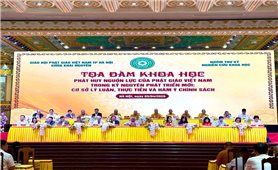
Abstract: This article systematically studies the economic resources of Vietnamese Buddhism and the direction for developing these resources in the new era - the context of Vietnam entering a strategic development phase linked to comprehensive digital transformation, green economy and sustainable development. The development of Buddhist economic resources is currently facing great opportunities thanks to the harmony between Buddhist philosophy and the trends of mindful consumption, the green economy and ESG standards. However, this process also faces complex challenges related to legal loopholes, risks of commercialization and internal governance capabilities. Based on an analysis of the current situation, this article proposes a comprehensive system of solutions aimed at transforming Buddhist economic resources into a significant endogenous driving force, making a practical contribution to the socio-economic development of the country and the sustainable well-being of the community.
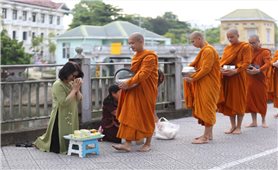
Abstract: This article delves into the concept of offerings within the cultural and philosophical context of Buddhism. This article delves into deciphering the nature of the act of offering alms not only as a religious ritual but also as a psychological therapy to transform greed and ego. Through the analysis of three core elements: the subject (the giver), the object (the offering), and the recipient (the receiver), a system of values regarding proper offerings is established, at the same time, it also warns about the pragmatic distortions of spirituality in modern society and proposes a path of practice based on the foundation of the Three Wheels of Emptiness and Tranquility.
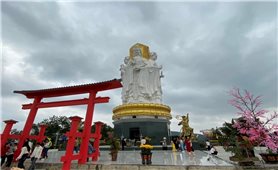
(DTTG) - The story of the transformation of Buddhist monasteries in Thanh Hoa province is a vivid testament to the spirit of “protecting the nation and ensuring the people’ well-being”. Over the past two decades, the movement to build “exemplary and progressive pagodas”, launched by the Vietnam Fatherland Front Committee of Thanh Hoa province in coordination with the Executive Board of the Vietnam Buddhist Association of the province, has no longer been confined to the grounds of individual temples but has become a powerful driving force, spreading deeply into the socio-economic life of the locality.
