English review |
MA. Nguyen Duy Dung, Journal of Ethnic and Religious Research -
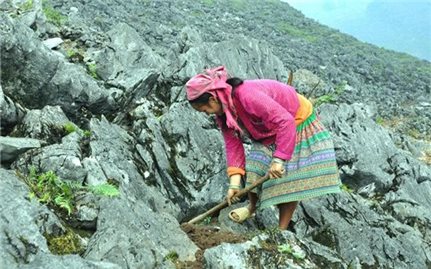
18:50, 02/03/2026 (DTTG) - Abstract: The local knowledge of ethnic minority communities in the northern mountainous areas is a particularly valuable cultural and social resource, formed through a long process of adaptation to specific ecological and environmental conditions. This article analyzes the structure, function and operating mechanisms of local knowledge in fields such as resource management, agricultural practices, biodiversity conservation, community organization and social relationship regulation. Based on this, the research analyzes the role of local knowledge in sustainable development, while also highlighting the challenges posed in the context of modernization, climate change and economic integration. At the same time, the article proposes directions and solutions to effectively integrate local knowledge into regional development strategies, ensuring harmony between growth, welfare and preservation of cultural identity.
(DTTG) - In Thanh Nua commune, a border area in Dien Bien province with a large population of the Thai ethnic minority, the story of escaping poverty is being written through changes in economic practices. From being accustomed to growing only rice, corn and cassava, many families have boldly built integrated economic models, developing livestock farming and crop cultivation combined with services, gradually becoming wealthy in their homeland.
(DTTG) - Every spring, as the earth and sky transition into a new cycle, the story of choosing an auspicious day and direction becomes a familiar concern for many Vietnamese families.
(DTTD) - Located not far from the center of the old Kon Tum city, beside the upstream-flowing Dak Bla River, the ancient village of Kon K’Tu appears like a picturesque landscape painting, rustic and tranquil. This is not only home to nearly 140 households of the Ba Na ethnic people but also one of the oldest villages in the Central Highlands, where traditional cultural values are preserved almost intact between the urban landscape.
(DTTG) - Abstract: On November 18th, 2016, the National Assembly of the Socialist Republic of Vietnam passed the Law on Beliefs and Religions; on December 30th, 2017, the Government issued Decree No. 162/2017/ND-CP detailing some articles and measures for the implementation of the Law on Beliefs and Religions (Decree No. 162/2017/ND-CP); on December 29th, 2023, the Government issued Decree No. 95/2023/ND-CP detailing some provisions and measures for the implementation of the Law on Beliefs and Religions (replacing Decree No. 162/2017/ND-CP). These documents all contain provisions on freedom of belief and religion, one of the fundamental human rights enshrined in the Constitution. Within the scope of this article, the author would like to provide an overview of human rights in the Law on Belief and Religion, focusing on the rights to freedom of belief, religion and the mechanisms for ensuring the implementation of these rights.
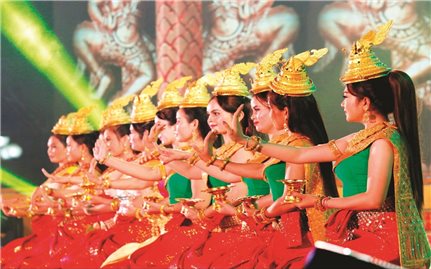
(DTTG) - The Khmer people view music and dance as a bridge between the realms of yin and yang. Dance expresses solidarity within the community, linked to beliefs, religion and typical rituals such as worshipping deities, processions, and prayers for peace. The Khmer people often say that everyone knows how to dance before they know how to read or write.
English review |
MA. Tran Hong Quynh - Hoang Phuong Lien -
15:59, 25/02/2026 Abstract: The rights of ethnic minorities are recognized in international legal documents and are classified as civil and political rights; these are fundamental rights that ethnic minority groups in all countries are entitled to. This article focuses on analyzing how Vietnam’s national legal system regulates three levels of obligations: respecting, protecting and fully implementing the rights of ethnic minorities.
(DTTG) - “Filial piety” is an important philosophy that every nation, people, religion and era values. For Vietnamese people, filial piety is a moral standard for evaluating a person’s character. Since ancient times, our ancestors have highly valued filial piety, commonly known as “filial piety” in folklore, and considered it the moral foundation that every person must cultivate and practice.
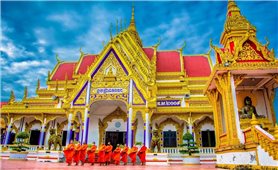
English review |
Assoc. Prof. Dr. Nguyen Thanh Xuan MA. Hoang Thi Hoa Ly -
11:50, 24/02/2026 (DTTG) - Abstract: Along with the Vietnamese people’s expansion into new lands came the development of Buddhism, both Mahayana and Theravada Buddhism in the South (Vietnam). Buddhism in the South (Vietnam) expanded its influence during the Buddhist revival movement in the first half of the 20th century. Along with its expansion and development, Buddhism in the South (Vietnam) made a very important contribution, together with the people of the whole country, to the success of the August Revolution (1945), the resistance war against French colonialism (1945-1954) and the resistance war against American imperialism (1954-1975), leading to national reunification and bringing the country together as one.
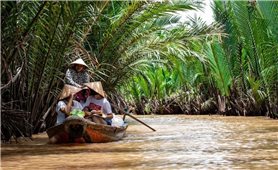
(DTTG) - Between the hustle and bustle of city life, more and more people are returning to the countryside to breathe fresh air, immerse themselves in the peaceful pace of life and experience local cultural values. Consequently, community tourism is becoming a new direction - a green and sustainable development model that helps Vietnamese villages “transform” while preserving its traditional charm.
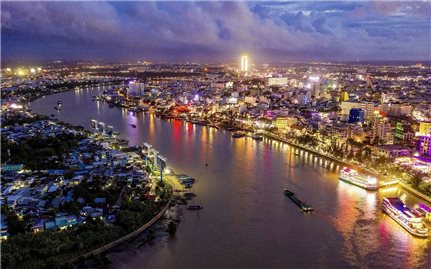
(DTTG) - The Southwestern region of Vietnam - the southernmost part of the S-shaped strip of land, is where the majestic Mekong River flows into the sea, carrying with it fertile alluvial soil and layers of ancient culture. There, amidst a network of canals and waterways, surrounded by sweet fruits and vegetables in all four seasons, a unique riverine culture has developed, both rustic and free-spirited - a “treasure trove” rich in Vietnamese identity.
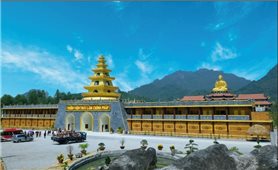
(DTTG) - Tuyen Quang is one of the impressive spiritual tourism destinations with many ancient and sacred pagodas, temples and shrines. Associated with Buddhist holidays, Mother Goddess worship, anniversaries of historical and cultural relics are spiritual festivals that are rich in distinctive traditional cultural features.
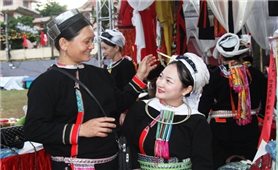
(DTTG) - This article focuses on analyzing the achievements, challenges and directions for improving ethnic policies in the new era, a period where the spirit of national self-reliance combined with deep international integration demands both respect for cultural identity and the promotion of comprehensive development in ethnic minority and mountainous areas.

(DTTG) - Located in Xuan Lap commune (Thanh Hoa province), the Le Hoan temple is a typical structure honoring the founding king of the Early Le Dynasty. Prominent within the architectural complex is a 17th century stone stele, erected during the Le Trung Hung era. The stele not only commemorates the merits of Le Dai Hanh but also reflects the political and cultural vision of the dynasty.
English review |
Assoc. Prof. Dr. Nguyen Thanh Xuan MA. Hoang Thi Hoa Ly -
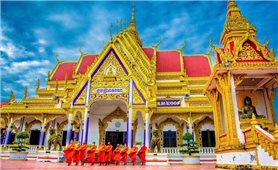
09:59, 22/02/2026 (DTTG) - Abstract: Along with the Vietnamese people’s expansion into new lands came the development of Buddhism, both Mahayana and Theravada Buddhism in the South (Vietnam). Buddhism in the South (Vietnam) expanded its influence during the Buddhist revival movement in the first half of the 20th century. Along with its expansion and development, Buddhism in the South (Vietnam) made a very important contribution, together with the people of the whole country, to the success of the August Revolution (1945), the resistance war against French colonialism (1945-1954) and the resistance war against American imperialism (1954-1975), leading to national reunification and bringing the country together as one.
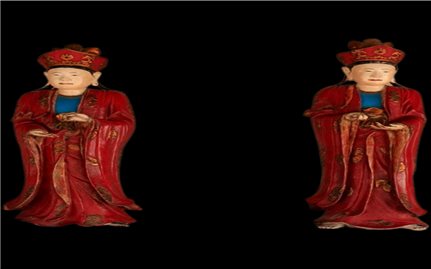
(DTTG) - One of the most famous relics in Hung Yen province is Nom pagoda - an ancient pagoda located in the heart of an ancient Vietnamese village, holding records that anyone who has ever set foot here will never forget.
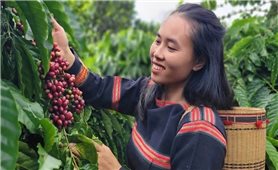
(DTTG) - From a passion for coffee beans and a desire to elevate the agricultural products of his homeland, Mr. Siu Sat (Mrong Yo one village, Ia Phi commune, Gia Lai province) has successfully built the “Jrai Ialy Coffee” brand. Starting from a small family coffee plantation, his clean coffee products have conquered the market, contributing to changing the production methods of local people.
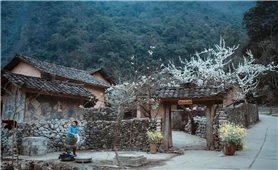
(DTTG) - Located in the heart of the Dong Van Karst Plateau Global Geopark, Dong Van old town stands out as a unique architectural space of the rocky mountainous region, while also preserving many historical and cultural values.
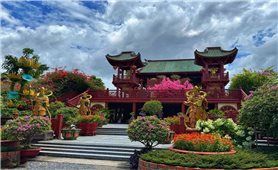
(DTTG) - Nestled at the foot of the majestic That Sơn mountain range, Lau Pagoda (officially Phuoc Lam Temple) in An Giang has long been a must-visit destination.
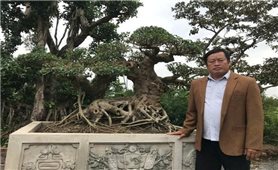
Ninh Binh - a land not only famous for its magnificent natural scenery but also for preserving many traditional cultural values, in which the ornamental plant industry, especially bonsai, has become an indispensable part of the lives of the people here. Prominent among families engaged in this craft is the Bui family, with its long-standing tradition and artistic creations of ornamental plants, preserving local cultural identity while simultaneously innovating new values. The bonsai artists of the Bui family not only create exquisite bonsai works of art, but are also inspiring artists for the entire community.
